
You keep losing size on a cut because you panic and change everything. The second calories drop, you train like a scared idiot, lighter weights, less rest, more sweat, more random bullshit, then you wonder why you look smaller.
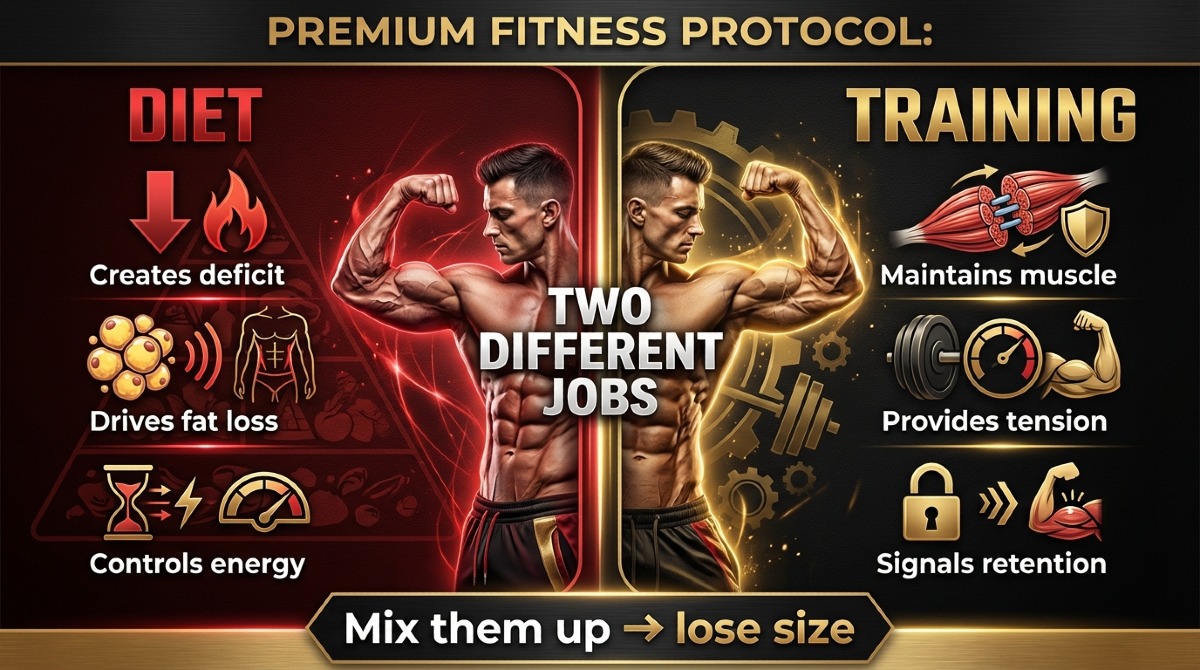
I keep this simple. The diet creates the deficit, and training protects muscle. If I forget that split, the cut gets ugly fast.
The Problem
Most fat-loss training fails because guys stop training like lifters. They start training like they’re trying to win a suffering contest. Loads drop too fast. Rest times get stupid short. Every session turns into cardio cosplay.
That feels hard, sure. It also sucks at keeping muscle.
The deficit is for fat loss, the weights are for muscle retention
I don’t use lifting to burn every calorie I can. I use lifting to tell my body, “keep this tissue, I still need it.” Food pulls energy down. Training keeps the signal alive. Clean jobs. Clear roles.
If I replace hard sets with circuits, burpees, and panic sweat, I blur those jobs. Then the deficit is doing its thing, but training stops giving my body a reason to hang on to size.
Why lighter, longer, harder-feeling workouts often backfire
Harder is not always better. Feeling wrecked is not the same as giving a strong muscle-retention signal. Low rest, junk volume, and fake intensity usually crush performance first.
Then recovery drops. Then strength slides. Then you blame the cut, when the real problem is that your lifting stopped looking like lifting. Resistance training is the main tool here. Cardio helps the cut, but cardio alone won’t do the muscle-saving job.
 ## The Reframe
When I’m cutting, I don’t treat the gym like a calorie furnace. I treat it like muscle insurance. I want enough load to matter, enough control to recover, and enough repeatability to know what’s happening week to week.
That’s why I keep movements familiar. A cut is a dumb time for novelty. If I swap half the program, I lose my measuring stick. Then weak performance gets excused because “it’s a new exercise.” No. I want honest data.
Keep the signal strong by holding onto load
I cut volume before I cut load. Almost every time. I’d rather do fewer hard sets than keep a mountain of tired bullshit and let intensity die.
So I still want one or two real movements each session, usually compounds or stable machines, living around 5 to 8 reps or 6 to 10. Not max-out hero crap, just load that still means something. That’s the backbone of how I read the protocol and coach this stuff.
Use boring, trackable training so I can see what is really happening
Good cuts are boring. That’s a compliment. I want stable execution, familiar lifts, and repeatable sessions. Boring lets me compare output. Boring tells me if I’m maintaining, or if I’m lying to myself because I’m hungry and emotional.
What I Actually Look At
 This is the biggest thing, I watch performance like a hawk. Pressing, rowing, squatting, hinging, machine work I trust, those numbers tell me fast if muscle is probably staying or slipping. I don’t expect PRs in a deficit. That’s fantasy. But I also don’t want strength falling off a cliff for three weeks straight.
Key lifts tell me fast if I am keeping muscle or losing it
A small drop is normal. Being a little flatter, a little less explosive, okay, fine. But if loads collapse fast across multiple lifts, I don’t scream “metabolism.” I look at the setup. Usually the deficit is too aggressive, sleep is trash, cardio got stupid, or total volume is too high for the food coming in.
I also watch how the reps look. Clean reps under control tell me more than macho grinding.
Volume stays high enough to matter, but low enough to recover from
Most guys don’t need more work on a cut. They need better work. For a lot of lifters, around 10 to 16 hard weekly sets per muscle is a solid starting range, then I adjust from recovery, training age, and how performance is holding. Some do fine with less. Some can handle more. It is not a law carved in stone.
I trim junk first. That means all the extra fatigue that looks productive but does nothing. Fewer hard sets beat a pile of tired sets every damn time. Most guys can preserve muscle on 2 to 4 lifting days per week if execution is tight and effort is real.
Cardio supports the cut, but it should not hijack the lifting
I separate cardio from lifting when I can. That’s a big one. I don’t want leg day turning into a bootcamp because somebody wants to “burn more.” Lifting protects tissue. Cardio helps drive output and fitness. When I force one tool to do both jobs, I usually get a shitty version of both.
Steady-state works. HIIT can work too. I pick the one I can recover from and repeat. Walking and daily steps matter a lot here because they add output without beating the hell out of me.
Food timing, sleep, and stress decide how much training I can actually hold
If I train better with carbs before lifting, I eat them. If protein after training helps me hit the day well, I do that too. Nothing magical, just practical. Better sessions usually mean better muscle retention.
Sleep matters more than most guys want to admit. Stress matters too. So does the size of the deficit. If food is too low, recovery gets kicked in the teeth. Then people blame the program when the real issue is that the whole system is too aggressive.
I also look past scale weight. Photos, tape measurements, gym performance, and body comp data if I have it, that stuff tells the truth better than body weight alone.
What To Do Instead
Keep heavy work in. Hold onto familiar lifts. Cut volume before load. Push hard, but don’t turn every compound into a recovery car crash.
Use cardio as support, not punishment. Keep isolation work focused. Stop chasing sweat like it means progress. And if you want proof this works on real people, not internet talk, you can see client results.
If my fat-loss plan turns lifting into random exhaustion, the setup is wrong. I want to get lean, keep muscle, and keep the signal loud. If you want me to clean that up properly, work with me.
Feel good, eat good, fuck good.
Disclaimer
This article is for education only. It is not medical advice, diagnosis, or treatment. If you have a medical condition, take medication, use PEDs, or have abnormal labs, get qualified medical oversight before applying any of this.
Author
Angelo is a European online coach and a former competitive bodybuilder. He works with serious lifters who want more muscle, better condition, sharper execution, and less guesswork. The job is simple: fix the basics, apply progression properly, manage recovery, and stop doing dumb shit that kills progress.


