Stop buying pre-workout like a kid buying fireworks.
Most guys judge it by the buzz, the face itch, the label art, or how insane they feel 20 minutes after the scoop. I don’t care about any of that by itself. If your session doesn’t improve, the product is bullshit, no matter how “hardcore” the tub looks.
I care about better output, better focus, better pacing, and less falloff across the workout. So I’ll show you what matters for strength, pumps, focus, and endurance, and what I usually skip because it’s filler, underdosed junk, or stim-trash for people who confuse panic with performance.
The Problem
A stronger workout matters more than a stronger buzz
A pre-workout should help me train better. That means more good reps, steadier effort, cleaner focus, and less drop-off when the work gets ugly. If I move more load, hit the target muscles better, and keep my head in the session, that product did its job.
Plenty of guys miss that. They take a scoop, feel wired, get shaky, start sweating like a maniac, and think, “Yeah, this shit is strong.” No. Maybe it’s strong. Maybe it’s stupid. If it makes me nauseous, kills my pacing, or leaves me fried and useless later, I didn’t win anything.
The label means nothing if the dose is too low
This is where brands screw people.
They throw ten flashy ingredients on the label, use cool names, and hide behind “proprietary blends” because the real doses are weak as hell. A label with more ingredients isn’t better. A transparent label with useful doses is better.
So I don’t get impressed by ingredient count. I look at what is in there, how much is in there, and whether that amount can do anything in the real world.
The Reframe
The real job of a pre-workout is simple. It should improve training quality. That’s it. It can help with energy, focus, blood flow, and work output. It cannot fix bad sleep, low calories, weak programming, shit hydration, or lazy effort.
A lot of men use pre-workout like a mask. They sleep five hours, eat like idiots, drag themselves into the gym, then try to snort motivation out of a shaker cup. That’s a dumb system. The scoop isn’t the engine. You’re the engine.
When I coach, I want the product to support the session, not fake intensity. Feeling cracked out is not the same as performing better. A good pre-workout helps me do more quality work. It doesn’t turn me into a sweaty squirrel with tunnel vision and a wrecked sleep schedule.
What I Actually Look At
Caffeine for energy, focus, and better output
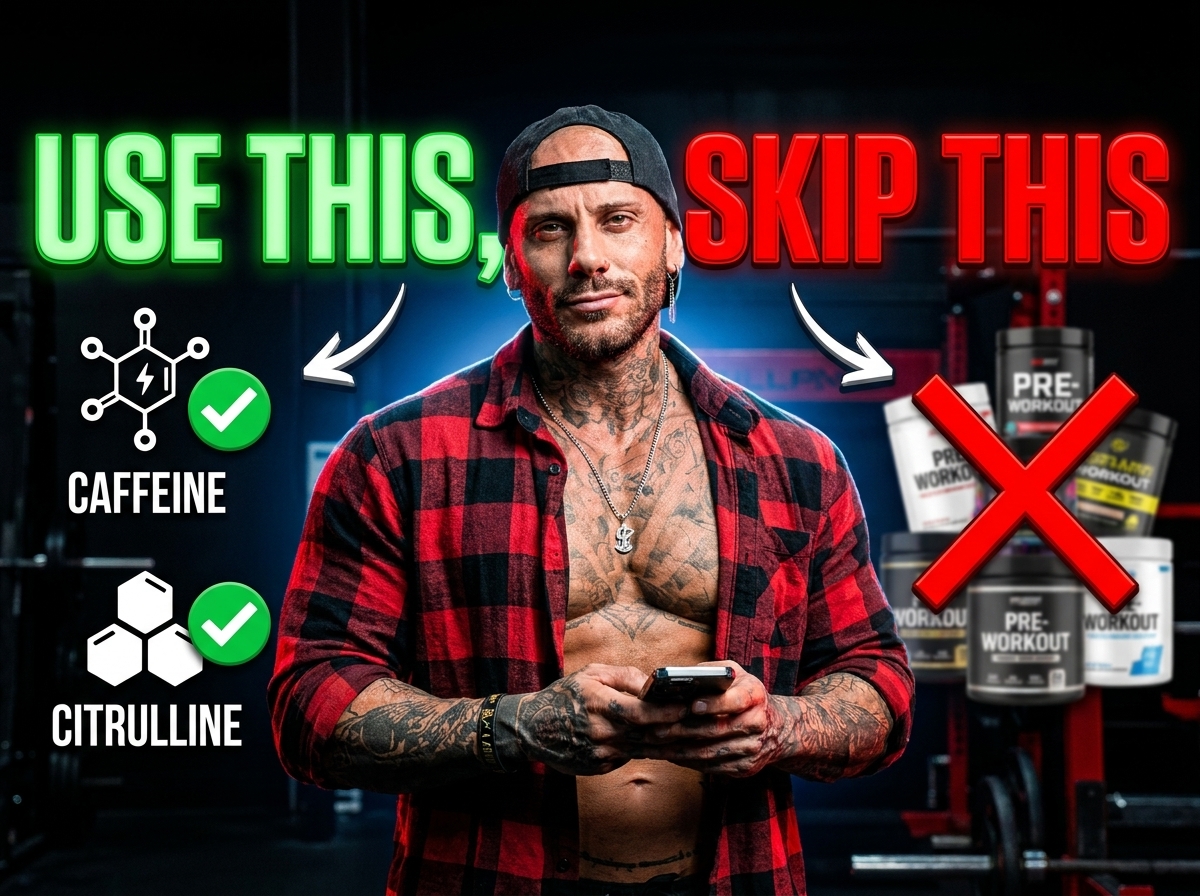
Caffeine is still the big dog for most lifters. It’s the ingredient I notice fastest, and for many people it’s the one with the clearest payoff. I get more alert, I lock in faster, and hard sets feel more attackable. That matters.
But more is not always better. A solid dose can help. A stupid dose can turn the workout into a mess. If you’re sensitive, 150 to 200 mg might be plenty. If you already live on coffee and bad decisions, your tolerance may be high, but that still doesn’t mean 450 mg before every session is smart.
I also care about timing. If I train late, I don’t want a scoop that trashes my sleep. Bad sleep kills recovery, and recovery grows muscle, not the scoop itself.
Citrulline malate or L-citrulline for pumps and blood flow
For pump ingredients, citrulline is one of the few I actually respect.
It supports nitric oxide production, which can help blood flow and give me a better training feel, better pumps, and sometimes better set quality. I like that because a good pump can improve connection and execution, especially on bodybuilding work. Still, I don’t worship the pump. A swollen muscle isn’t automatic growth. It’s useful, not magical.
Form matters, and dose matters. That’s where brands play games. If I see a tiny mystery blend with a bunch of pump words and no real amounts, I move on. I’d rather see a straightforward formula with enough citrulline than some overdecorated label with fairy dust.
Creatine helps, but it doesn’t need to be in pre-workout
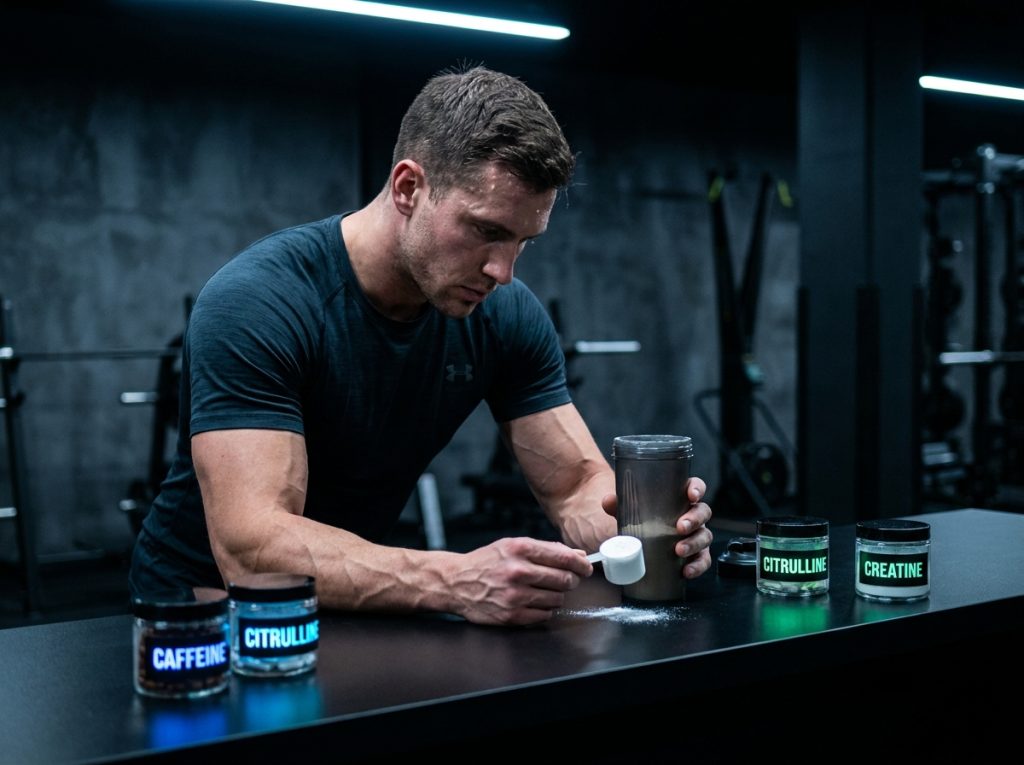
Creatine is one of the best supplements in the game. Full stop. It can help strength, power, training volume, and muscle gain over time. I use it. I recommend it. I trust it far more than most shiny extras in pre-workout formulas.
Still, creatine does not need to sit inside a pre-workout to work. This is where people get fooled.
Creatine works by saturation. I care more that I take it consistently than when I take it. So if a product has creatine, fine. If it doesn’t, also fine. I can take creatine any time of day and still get the benefit. I don’t let a label trick me into thinking the tub is better because it shoved 3 to 5 grams of creatine into the scoop.
Beta-alanine can help, but the tingles mean nothing
Beta-alanine is the king of fake signal.
Guys feel the tingles and think the pre-workout is “hitting.” No. The tingles are just the side effect. They are not proof of quality, and they are damn sure not proof of better results. Some products even lean into that because people now associate face itch with power. That’s clown behavior.
The actual use of beta-alanine is more boring and more honest. It may help with repeated hard efforts and muscular endurance, especially in higher-rep work or dense training. That’s a long-game benefit from regular intake, not some instant superpower from one scoop before curls. So I don’t treat it like a must-have. Helpful for some lifters, yes. Essential for every pre-workout, no.
What I usually skip on the label
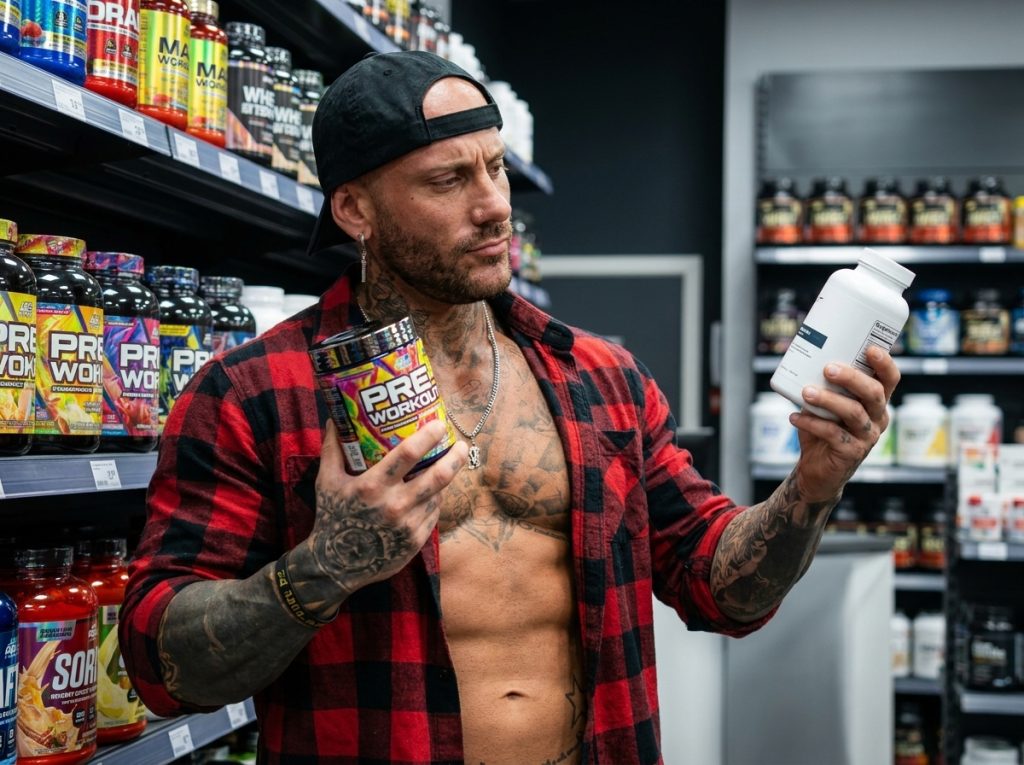
I skip proprietary blends fast. If the brand hides the amounts, my trust drops hard. There is a reason they don’t want you looking too closely.
I also skip massive stimulant blends that read like a chemistry set built by a lunatic. Too much stim can wreck pacing, spike heart rate, push anxiety up, and crush sleep later. That hurts recovery, and then the whole week gets worse because one workout felt “intense.”
BCAAs in pre-workout usually don’t move me either. If I already eat enough protein, I don’t need to pay extra for flavored dust pretending to be special. Same story with tiny arginine doses, random nootropics with weak support, and trendy compounds that sound advanced but don’t change the session enough to justify the price.
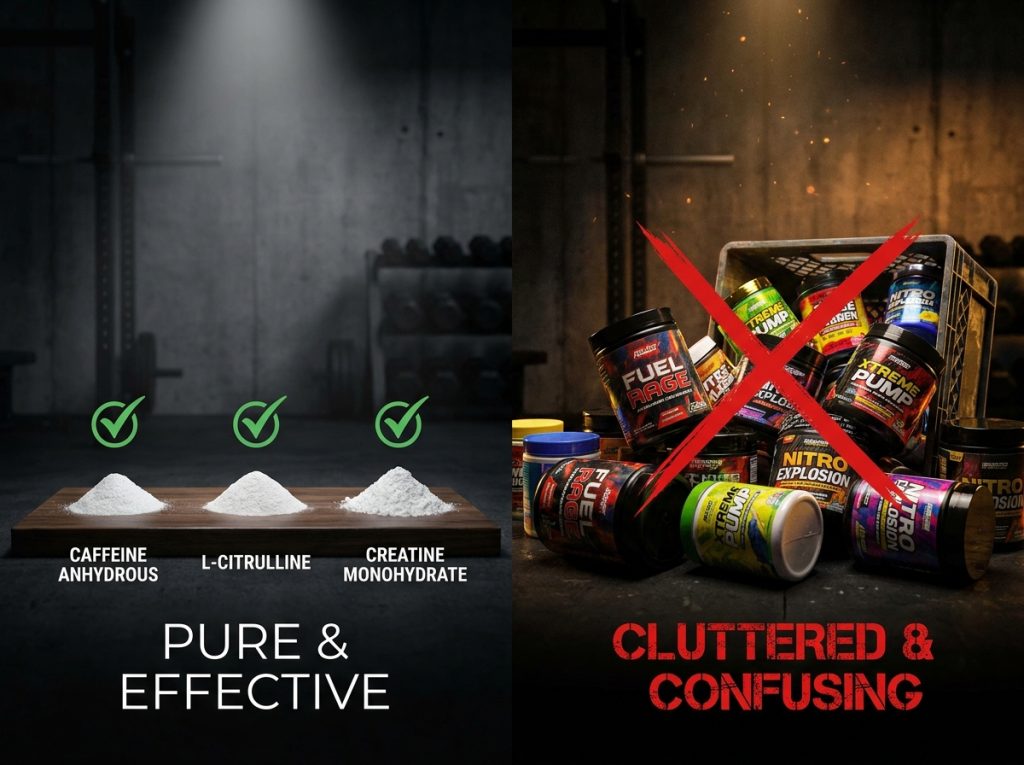
If a formula needs mystery, hype language, and fake science names to sell itself, I assume the product is weak until proven otherwise.
What To Do Instead
Pick a pre-workout based on what you need in the gym, not what makes you feel the most insane in the parking lot.
If I want energy and focus, caffeine plus a simple support formula is often enough. If I want a better pump, I look for proper citrulline. If I want creatine, I can take it separately and stop pretending timing is magic. If I train late or hate stimulants, I go low-stim or non-stim and protect sleep.
Start with the minimum effective dose. Watch how you respond. Pay attention to training time, hydration, appetite, sleep, and recovery. If a product improves one session but screws up the next day, it failed the bigger test.
FAQ
What is the best pre-workout ingredient for strength?
For most people, caffeine gives the clearest short-term boost for training output, focus, and effort. Creatine matters a lot too, but it works from daily use over time, not because I took it 20 minutes before bench.
Is beta-alanine worth it in pre-workout?
Sometimes, yes. It can help muscular endurance with regular use. I still don’t treat it like a deal-breaker because the tingles fool people into overrating it.
Do I need BCAAs in a pre-workout?
Usually, no. If I already hit enough daily protein, BCAAs don’t bring much value to that formula. They often add cost more than results.
Are high-stim pre-workouts better for fat loss workouts?
Not by default. They may make me feel more fired up, but if they wreck sleep, raise stress, and hurt recovery, fat loss can get harder, not easier.
I keep this simple. I care less about hype and more about whether the ingredients improve the session at doses that can actually do something. Read the label, keep the formula clean, and stop paying for filler because the tub looks angry. If you want help cutting through the bullshit and building a plan that gets results in the gym and outside it, work with me.
Feel good, eat good, fuck good.
Disclaimer This article is for education only. It is not medical advice, diagnosis, or treatment. If you have a medical condition, take medication, use PEDs, or have abnormal labs, get qualified medical oversight before applying any of this.
Author Angelo is a European online coach and a former competitive bodybuilder. He works with serious lifters who want more muscle, better condition, sharper execution, and less guesswork. The job is simple: fix the basics, apply progression properly, manage recovery, and stop doing dumb shit that kills progress.
Scientific References