You’re not stuck because the weight is too light. You’re stuck because you keep turning every set into a circus. I see it all the time, swinging dumbbells, half reps, ugly grinders, and a whole lot of noise that looks hard but doesn’t build much.
If I clean your rep up, drop the load, and force the target muscle to do the damn work, your body starts growing again. That’s the shift, and most guys fight it because their ego loves numbers more than results.
The Problem
Ego lifting is simple. You pick a weight you can’t truly control, then you fake the rep with momentum, shortened range, and whatever body part can help you survive it. The logbook says you worked. The muscle says otherwise.
I’ve seen lateral raises turn into torso swings, curls turn into hip thrusts, presses turn into half reps, and rows turn into lower back yanks. Load goes up before control is earned, so range shrinks, tension leaks, and joints take the hit. Then guys wonder why their delts, chest, or arms still look the same.

What ego lifting looks like in real life
The red flags are boringly obvious. Shortened range. Bouncing out of the bottom. Hips leaving the bench. Knees caving in. Rounded backs. A spotter touching every rep. Or my favorite, the target muscle fails, then the guy keeps the set alive by turning it into a different exercise.
Why heavy slop feels productive
Because it looks violent. It feels hard. It makes noise. Your nervous system lights up, your face turns red, and you think suffering equals stimulus. It doesn’t.
For muscle growth, the target muscle needs enough tension, enough reps, and enough effort close to failure. Current evidence backs what good coaches already see: muscle can grow across a wide rep range if the sets are hard and controlled. Heavy weights matter, sure, but fake-heavy reps are bullshit.
The Reframe
I don’t worship the load. I chase tension. That’s the whole reframe.
Stop asking how heavy the dumbbell is. Ask who the hell is doing the work. If your side delt owns the rep from start to finish, the set matters. If your traps, hips, lower back, and tendons keep stealing the job, you’re not training the muscle. You’re moving weight around.
A clean 8kg lateral raise will beat a swinging 20kg mess every single time for side-delt growth. Same with flyes, curls, rows, leg extensions, all of it. Progressive overload still matters, but only when the movement stays honest. That’s how physiques change for real, and if you want proof, see client results.

The muscle has to own the rep
Once the target muscle stops carrying the movement, the useful part is over. I don’t care if the dumbbell still gets from point A to point B. That means nothing by itself.
Repeatable training wins
The guy who trains clean for 12 straight months will outgrow the clown who ego lifts for six weeks, then disappears with a fried shoulder or pissed-off elbow. Longevity isn’t soft. It’s smart.
What I Actually Look At
When I coach a lift, I don’t start with ego. I start with the rep.
First, I want the setup owned
If the start position is rushed, loose, or unstable, the rest usually goes to shit. I want your feet planted, torso braced, joints lined up, and the body set so the target muscle begins loaded. If you start sloppy, you usually finish worse.
Then I check the range you can control
I don’t mean fake extreme range, and I don’t mean tiny half reps. I mean the fullest range you can control while the target muscle stays loaded. Once tension dumps into the joints, or into some other body part, the good part of the rep is done.
After that, I watch control
I don’t need a stopwatch. I just need to see whether you own the weight. Can you lower it under command? Can you stop bouncing? Can you lift without swinging like a drunk idiot? If the weight drags you around, it’s too heavy for the goal.
Effort only counts if the exercise stays the same
A real hard set ends when the target muscle is near failure and the rep still looks like the rep. A fake hard set changes mid-set. First it’s a curl, then it’s a standing back extension with elbows. That’s not grit. That’s panic.
Then I pick rep ranges you can repeat
Muscle can grow from roughly 5 to 30 reps if sets are hard and close to failure. But practical ranges matter. Most upper body work sits nicely around 8 to 15. Back work often does well around 8 to 12. Legs usually handle 15 to 20 without a problem. Chest can often go a bit lower than shoulders and stay joint-friendly.
My rule for progression is simple
Earn the load jump.
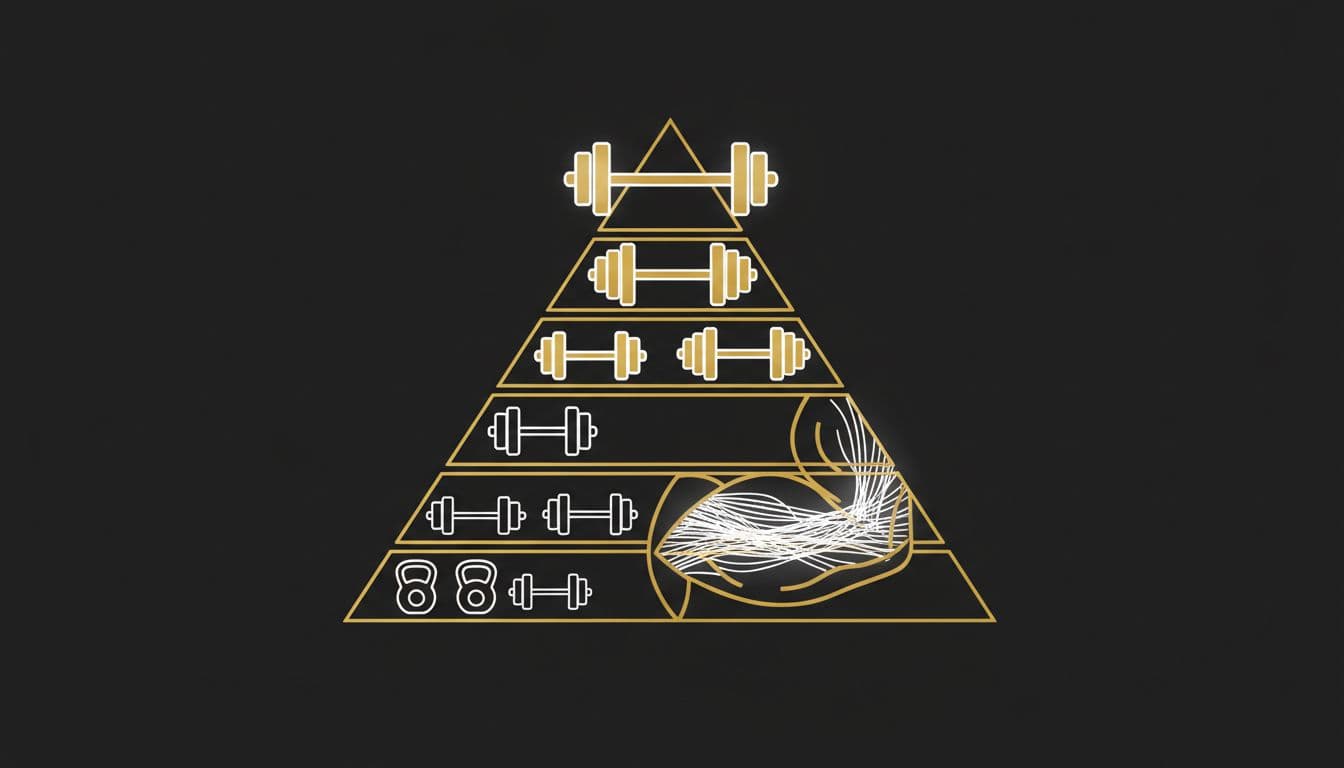
If you hit 100kg for 9 clean reps in an 8 to 10 range, I keep you there next time and ask for more. If you come back and hit 11 clean reps, good, now you’ve earned a small jump. Then we rebuild inside the same standards, same range, same honesty.
That’s the whole system. Lock in the pattern, then get brutally strong inside that pattern. If you want the bigger picture of how I build training, read the protocol or read more articles.
What To Do Instead
Drop the load enough to clean the movement up. Keep the target muscle loaded. Use full honest reps. Track the set. Then only add weight when the form still holds together.
Film your sets. Use small jumps. Stay in rep ranges you can own. Most guys don’t need more hype. They need more honesty.
Use this simple test on every set
- Can I own the start?
- Can I keep tension where I want it?
- Can I stay controlled when it gets hard?
- Can I repeat this for months without wrecking myself?
If the answer is yes, keep building. If not, lower the damn weight.
Train honestly, not softly. Clean progression beats gym theater every time, and boring works when you let it work. If you want me to clean up your execution, fix your weak links, and make your training produce muscle, work with me.
Feel good, eat good, fuck good.
Disclaimer This article is for education only. It is not medical advice, diagnosis, or treatment. If you have a medical condition, take medication, use PEDs, or have abnormal labs, get qualified medical oversight before applying any of this.
Author Angelo is a European online coach and a former competitive bodybuilder. He works with serious lifters who want more muscle, better condition, sharper execution, and less guesswork. The job is simple: fix the basics, apply progression properly, manage recovery, and stop doing dumb shit that kills progress.
Scientific References