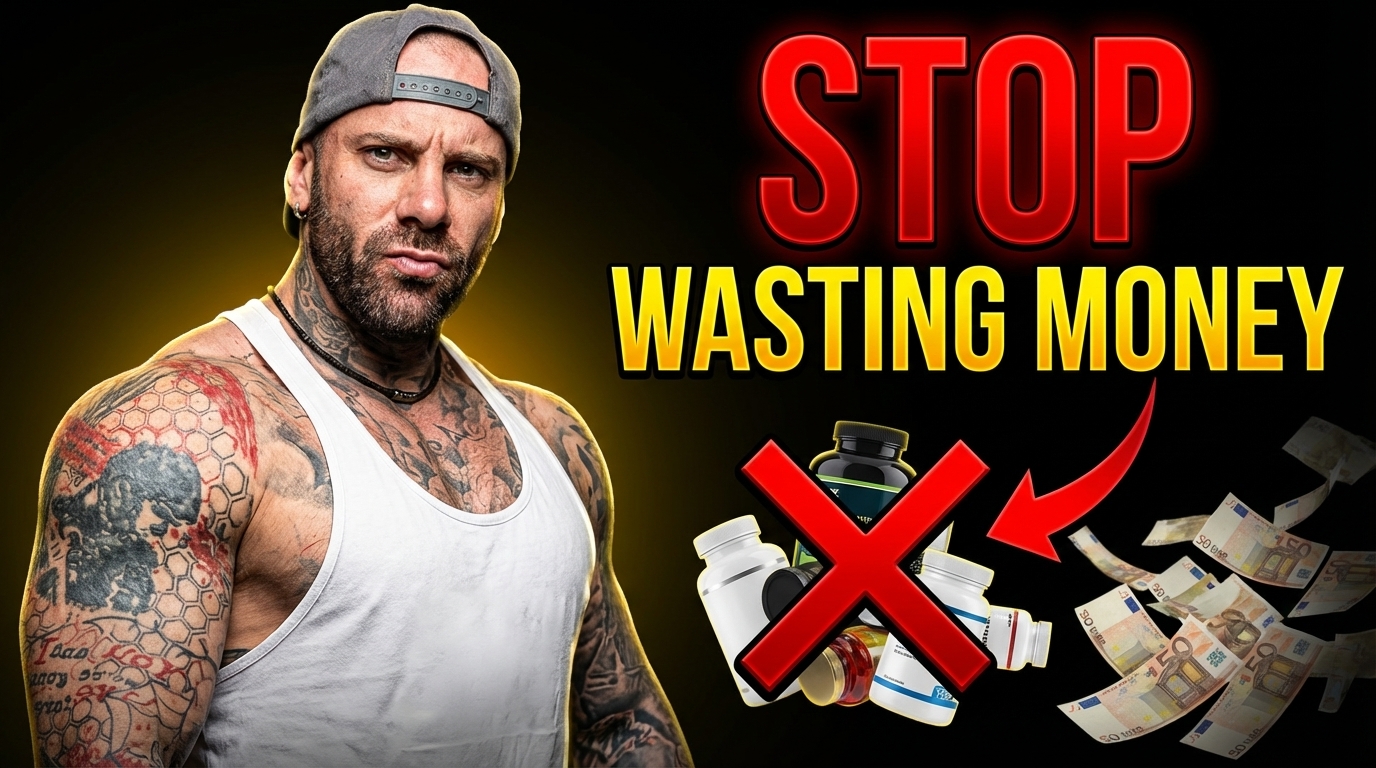
You don’t need another tub. You need to stop bullshitting yourself.
I see guys buy fat burners, pump junk, test boosters, and random stacks while their calories are chaos, their sleep is trash, and their training hasn’t moved in months. I’m not anti-supplements. I’m anti bullshit. If your food, recovery, steps, and progression are sloppy, that whole stack is expensive noise.
The Problem
Most supplement mistakes start in your head, not in the bottle. A guy sees a video, feels behind, buys hope, takes the thing for two weeks, changes nothing important, then says it didn’t work. Of course it didn’t. The product landed on top of a weak system.
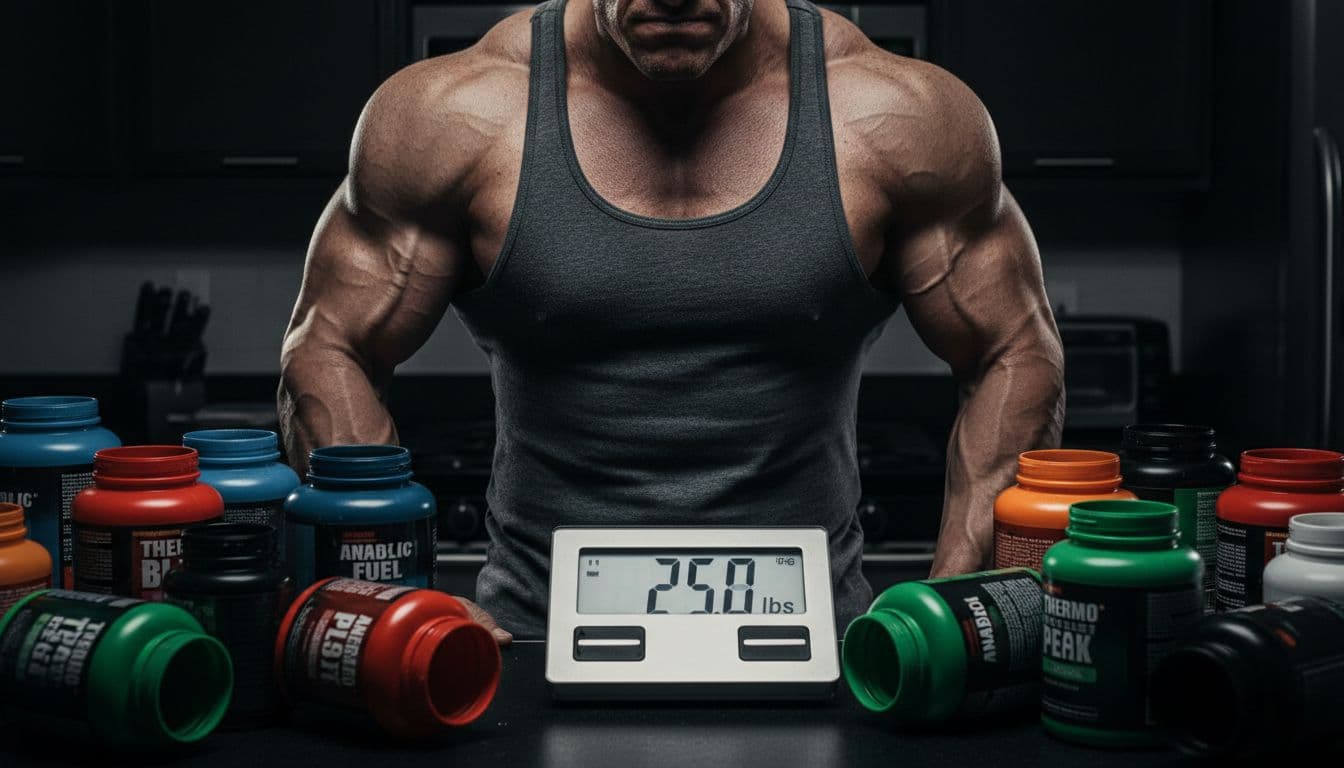
I keep seeing the same pattern. No stable calorie target. Protein is low. Sleep is broken. Training is random. There is no logbook. Body weight isn’t tracked honestly. Then the blame goes to the powder, like the oven failed when you never put food in it.
You cannot out-supplement bad food, bad sleep, and no progression
This part is boring, so people skip it. Big mistake. If I want muscle gain, or I want to hold muscle while dieting, I first lock in calories and protein, usually around 1.8 to 2.2 grams per kilo of body weight. Then I fix sleep, training structure, and consistency. Those move the body. The rest is garnish.
If you cannot measure the problem, you cannot judge the supplement
My rule is simple. Every supplement needs a clear job and a way to judge it fast. I want to see something within a few weeks, better session output, better hydration, stronger lifts, easier protein intake, or steadier recovery. If the answer is vague, I leave it alone.
If I can’t tell what problem it solves, I don’t buy it.
The Reframe
I don’t treat supplements like the main event. I treat them like support tools. Small ones. Sometimes useful, often overhyped, never a fix for a weak base.
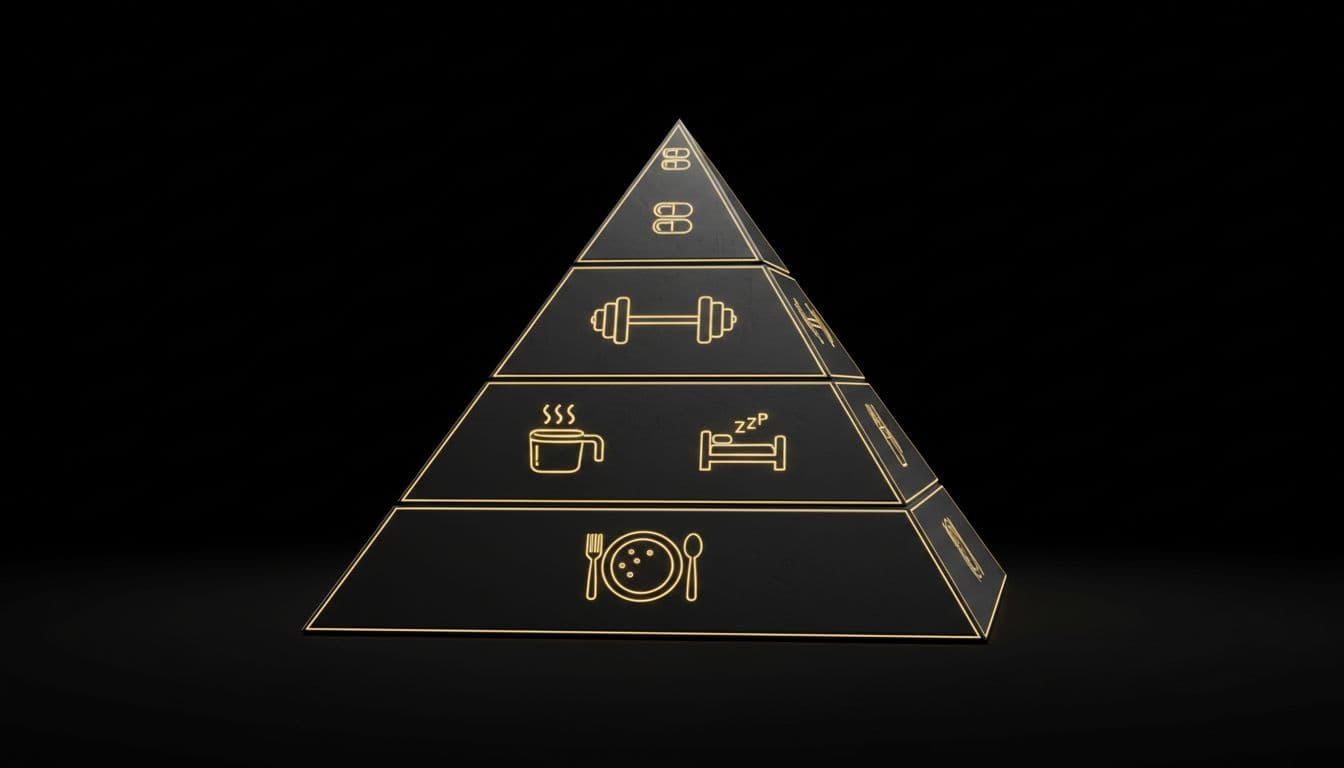
So I clean up the big rocks first, food, protein, sleep, steps, training, and recovery. Then, and only then, I ask whether a product has a real job. Context matters. Not every guy needs the same list. A hard-training lifter in a deep diet phase is not the same as a guy sleeping five hours and eating like a raccoon.
Ask one blunt question, what problem does this solve
If the answer sounds emotional, vague, or hype-driven, it’s probably a bad buy. I’d rather spend money on better food, bloodwork when needed, or learning how to train like an adult.
A short useful list beats a kitchen full of tubs
Once the base is in place, a few things can earn a spot. Not fifty. Not a shelf full of action-movie labels. A short list that solves real problems always beats a shiny stack with no point.
What I Actually Look At
Before I talk supplements, I look at the base. Always. Are calories stable? Is protein high enough? Are steps in check? Are you sleeping like a grown man, or are you trying to fix five hours of broken sleep with pre-workout and anger? Then I look at the program. Are the lifts moving? Is there a logbook? Is body weight trending where it should?
That’s the stuff that changes physiques. If you want proof, go see client results. It’s always the guys who nail the boring work who change the fastest.
Supplements that can earn their place when the basics are solid
Creatine monohydrate stays. Five grams a day. Every day. No stupid loading phase needed. Give it three to four weeks. Then let it do its job. In the real world, I keep seeing the same thing, a bit more strength, a bit more volume, a bit more work done over time. Nothing flashy. It just works.
Protein powder also has a place, but I treat it like food that needs less chewing. That’s it. If you’re already hitting protein from meals, fine, you don’t need it. If work is busy, appetite is low, or you’re traveling and missing the target, whey is a cheap fix. Not magic muscle dust.
Caffeine can help too. Used right, around 3 to 6 mg per kilo taken 30 to 60 minutes before training, it can improve focus and output. But if you need it just to feel alive, that isn’t a pre-workout issue. That’s a lifestyle problem.
Then there are context buys. Fish oil can make sense if you don’t eat fatty fish a couple times a week. Vitamin D can make sense if bloodwork says you’re low, or if you get little sun. Electrolytes can help during hard sessions, long sessions, or aggressive dieting phases where you’re sweating more and intake is tighter. I don’t throw these at everyone. I use them when they solve something real.
Supplements that usually waste your money
Fat burners are mostly overpriced stimulants with louder labels than results. Fat loss still comes from a calorie deficit. If the scale hasn’t moved in two weeks, I don’t need a miracle pill. I need better tracking, tighter intake, maybe 200 fewer calories, more steps, and more honesty.
Test boosters usually do nothing worth caring about for healthy trained men. They sell hope to guys who don’t want to fix body fat, sleep, food, or recovery.
BCAAs are easy. If total daily protein is high enough, you’ve already handled the point. Save your money.
Pump formulas are fine if you like the feeling. I’m not against a good pump. It feels great. But let’s not pretend swollen arms in the mirror mean progress happened. If the lifts aren’t moving and your physique isn’t changing, the pump was just fun. Nice, but not the point.
What To Do Instead
Before you buy anything, run a hard reset. Here’s the five-point check I use:
- Stable calories, not weekend chaos
- Enough daily protein
- Real sleep, not fake recovery
- Progressive training with a logbook
- A clear reason the product exists
If one of those is missing, fix that first. Build a system, then add only what earns its place. If you want a clearer setup for training, nutrition, and recovery, go read the protocol or read more articles.
Most guys don’t need a bigger stack. They need better habits, better tracking, and more honesty. Supplements are support, not salvation. If you’re done wasting money and want structure, data, and less guesswork, work with me.
Feel good, eat good, fuck good.
Disclaimer This article is for education only. It is not medical advice, diagnosis, or treatment. If you have a medical condition, take medication, use PEDs, or have abnormal labs, get qualified medical oversight before applying any of this.
Author Angelo is a European online coach and a former competitive bodybuilder. He works with serious lifters who want more muscle, better condition, sharper execution, and less guesswork. The job is simple: fix the basics, apply progression properly, manage recovery, and stop doing dumb shit that kills progress.