
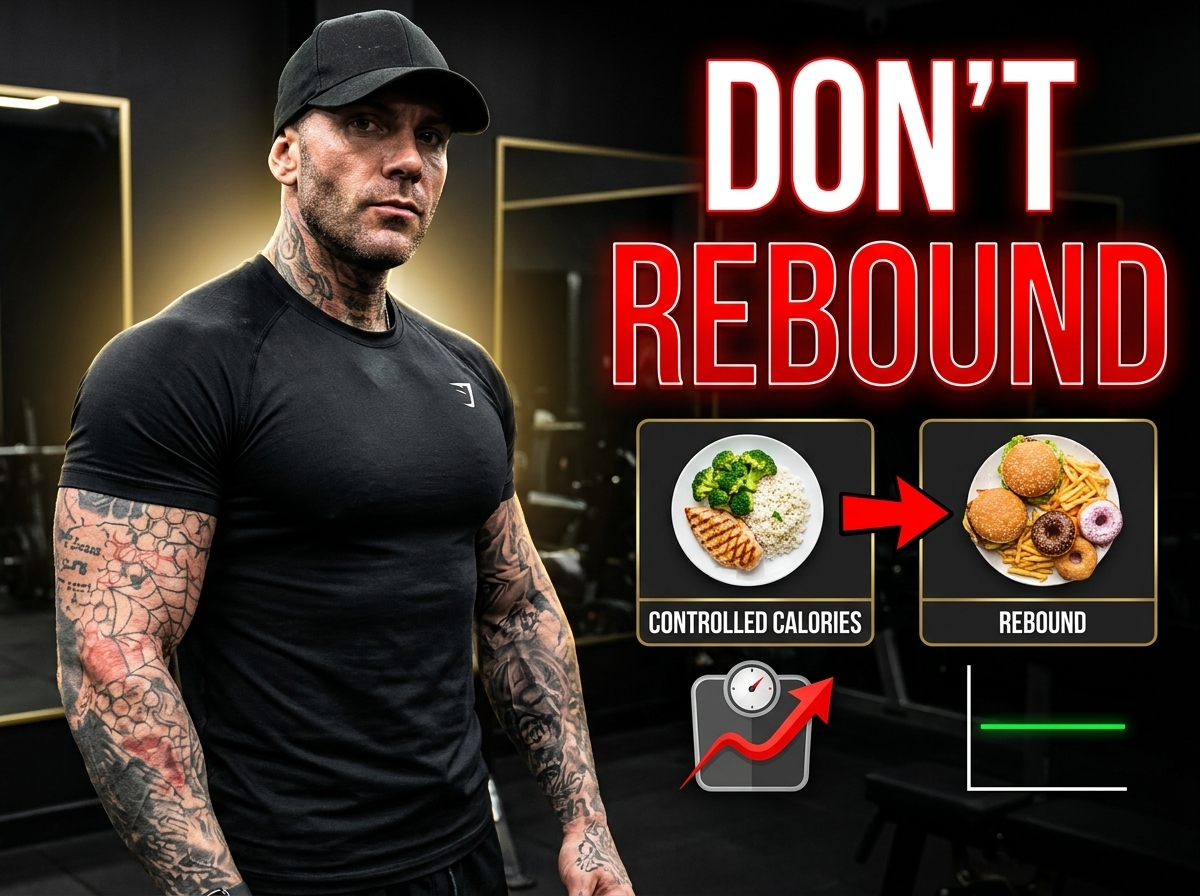
You didn’t “break your metabolism.” You ended the cut, got sloppy, ate like an asshole for three days, moved less, tracked less, and then blamed your body when you got soft. I see this all the time.
The diet ends, discipline ends with it, and then guys act shocked when the scale jumps and the waist thickens. I want to show you how I move to maintenance calories after a cut without the usual rebound mess, because hunger, lower activity, diet fatigue, and lazy tracking are the real killers.
The Problem
Most rebound fat gain starts with a lie. The lie is, “I’m eating at maintenance.” No, you’re not. You’re eating more meals out, pouring oil like a lunatic, grabbing bites off other people’s plates, and taking weekends off like you won a damn trophy.

Why rebound fat gain happens so fast after a diet
After a hard cut, hunger is loud. Food focus is high. Daily movement often drops because you’re cooked. Then carbs go up, glycogen comes back, water comes back, digestion has more food in it, and the scale jumps. Guys see that jump, panic, or worse, say “fuck it” and eat even more. Weekend overeating finishes the job.
What people get wrong about reverse dieting and maintenance
A reverse diet is one tool. It is not magic. Some guys need slow calorie increases because appetite is wild or activity crashed. Other guys can move straight to true maintenance and hold fine. What matters is control, data, and patience. Maintenance after a cut changes fast because body weight, steps, training output, stress, and hunger all change too.
The Reframe
Right after a cut, I treat maintenance like recovery work. I am trying to hold condition, bring training back to life, calm hunger down, and stabilize body weight. I am not chasing endless fat loss, and I am not celebrating with cheat days like a drunk tourist.
A small scale bump in the first week or two can be normal. More carbs pull water back in. More food means more food sitting in the gut. That does not mean I gained three pounds of fat overnight, because that would take a much bigger overeating streak than one decent refeed meal.
I care more about the weekly average, waist, and mirror than one random morning weigh-in.
What a normal scale increase looks like
If body weight pops up a little, then settles, I’m fine. If it keeps climbing hard while the waist blows up, now I pay attention. I expect some refill weight. I do not expect a fast jump in waist size.
The signs that I’m actually at maintenance
I want weekly average body weight mostly stable. I want better gym performance, better pumps, more normal digestion, and hunger that doesn’t feel feral all day. Energy should improve. Mood usually improves too. If all that happens and the waist stays controlled, I know I’m close.
What I Actually Look At
I don’t guess post-cut maintenance. I check trends. I check habits. I check whether the body is recovering or whether the guy is bullshitting himself. Structure wins here every time, and you can see client results if you need proof that clean check-ins beat random “intuitive” eating.
Body weight trend, waist, and photos tell me the truth
One weigh-in means almost nothing. Bad sleep can spike scale weight. A salty meal can spike it. A hard leg day can do it too. So I use a 7-day average, not one emotional Tuesday morning number.
I also measure the waist at the navel, same time, same setup. Then I compare weekly photos. Front, side, back, same lighting. When all three line up, weight trend, waist, and photos, I get the real picture.
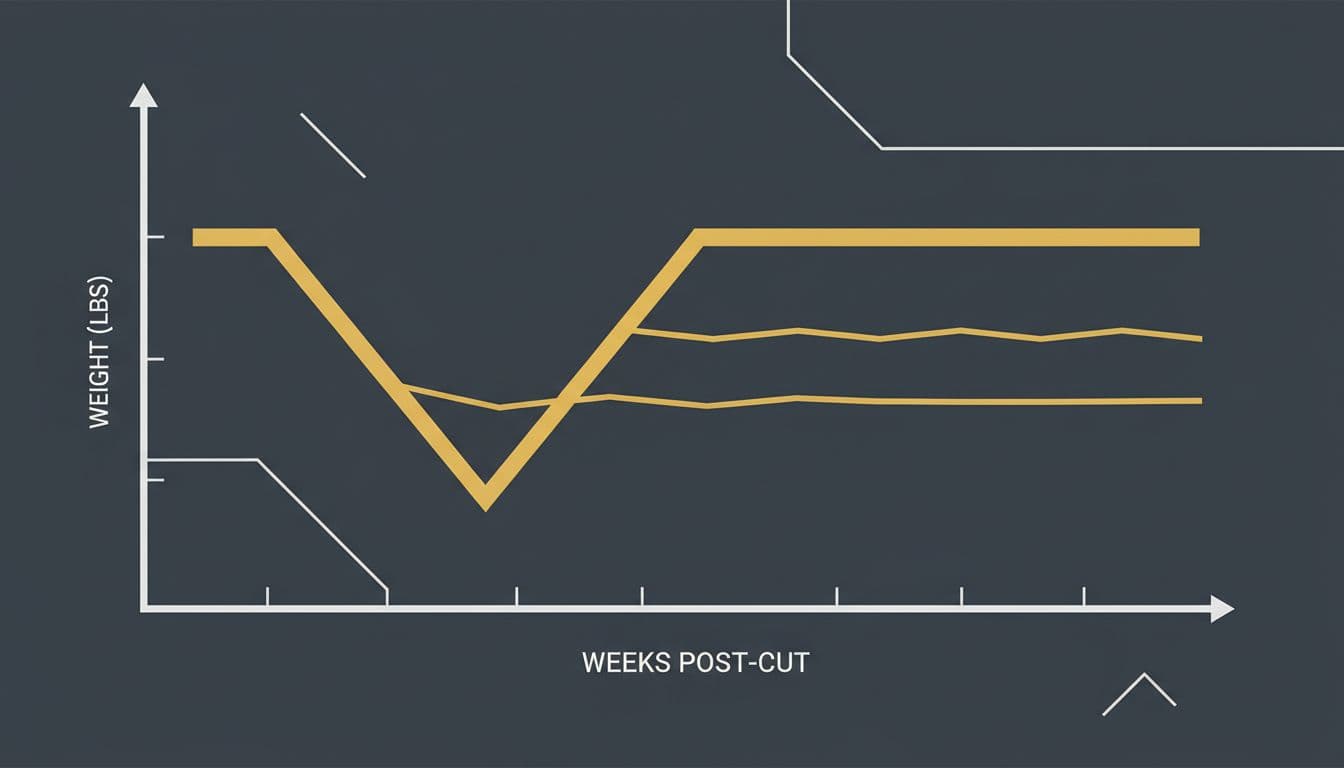
If the scale is up three pounds but the waist is stable and I look fuller, I don’t freak out. That is often refill weight, not fat. If the average keeps rising for two weeks and the waist climbs with it, now I’m not at maintenance anymore, I am in a surplus whether I like that fact or not.
Training performance and recovery tell me if calories are still too low
A lot of guys are scared to raise food because they think any scale jump means failure. Meanwhile their lifts still suck, pumps are flat, recovery is shit, sleep is bad, libido is dead, and mood is trash. That’s not a good maintenance phase. That’s a tired guy hanging on by his fingertips.
I want to see rep quality come back. I want strength to stabilize or improve. I want you to walk into the gym with some life again. If performance is still crashing, then calories may still be too low, even if you’re scared to eat. Maintenance should let you train hard without feeling like roadkill every session.
Steps, cardio, and daily movement change maintenance fast
This one gets missed all the time. During a cut, I may force steps, force cardio, and force output. Then food goes up and I assume maintenance is now high. Fine, maybe. But if daily movement drops hard because diet fatigue finally hits, maintenance may not be as high as I think.
I watch steps closely for that reason. If a guy was hitting 12,000 a day during the cut and now he’s doing 7,000 without noticing, that changes the whole picture. Same with cardio. If I pull cardio too fast and food goes up at the same time, I can overshoot fast. Maintenance has to match actual output, not fantasy output.
Food accuracy matters most right after the cut
The first two to four weeks after a cut are not the time to eyeball everything. That’s where rebound starts. Portion creep is sneaky. Peanut butter turns into a brick. Rice portions get generous. Restaurant meals blow past the numbers. A few bites here, a drink there, a “cheat” meal that turns into a cheat weekend, and now you’re cooked.
So I keep food boring for a bit. Not miserable, just repeatable. I keep protein high. I usually bring carbs up first because they help training and refill muscle better. Fats can rise later if needed. I keep meals structured, sodium consistent, and weekends under control. If you want the full system I use for this, read the protocol.
What To Do Instead
I move from deficit to maintenance with a plan. I add a moderate amount of calories, usually from carbs first, keep protein stable, and hold that setup for 7 to 14 days. Then I review the weekly average, waist, photos, steps, pumps, sleep, and training log before I touch anything again.
I also keep cardio consistent at first. I don’t slash it because I feel free. I keep steps steady. I keep meal timing tight. I keep hunger-friendly foods in, high-volume meals, lean protein, fruit, potatoes, rice, yogurt, stuff that doesn’t turn into a binge. Weekends matter most, because one loose Saturday can erase six clean days if you act like the diet ending means all rules are gone.
FAQ
How fast should I raise calories after a cut?
Fast enough to stop digging the hole deeper, but controlled enough to collect good data. I like one measured bump, then 7 to 14 days of holding.
Do I need reverse dieting?
Maybe, maybe not. Some guys do fine going straight to true maintenance. Others need slower increases because hunger, low activity, and bad control make overshooting easy.
How much weight gain is normal after a cut?
A small jump in the first one to two weeks can be normal from more carbs, more water, and more food volume. I care about trends, not one spike.
When should I reduce cardio?
Only when food, body weight, steps, and recovery are stable enough to read clearly. If you pull cardio and raise food together, you can misread maintenance fast.
How do I tell water gain from fat gain?
Water comes on fast and can settle fast. Fat gain keeps pushing the weekly average and waist up over time.
Maintenance after a cut still takes discipline. I don’t need diet-mode misery forever, but I do need control long enough to let my body settle, training recover, and hunger calm down. If you want that handled with structure instead of guessing, you can work with me. The diet ending doesn’t mean the rules are gone. It means the next phase starts, and I better stop doing dumb shit.
Feel good, eat good, fuck good.
Disclaimer This article is for education only. It is not medical advice, diagnosis, or treatment. If you have a medical condition, take medication, use PEDs, or have abnormal labs, get qualified medical oversight before applying any of this.
Author Angelo is a European online coach and a former competitive bodybuilder. He works with serious lifters who want more muscle, better condition, sharper execution, and less guesswork. The job is simple: fix the basics, apply progression properly, manage recovery, and stop doing dumb shit that kills progress.