
You keep trying to grow on a body that never gets a chance to recover. Then you wonder why the pump sucks, the soreness stays too long, your lifts feel flat, and every little ache starts talking shit to you.
I don’t treat recovery like soft side work. I treat it like part of the job, because muscle is built after the workout, not while I’m busy turning one set into a war crime.
For me, this comes down to three big levers, workout nutrition, sleep, and stress. When I get those right, training starts paying me back.
The Problem
Most guys train like animals and recover like idiots. They obsess over sets, reps, failure, exercise swaps, intensity tricks, and all the sexy gym stuff, but the other 23 hours of the day look like a damn mess.
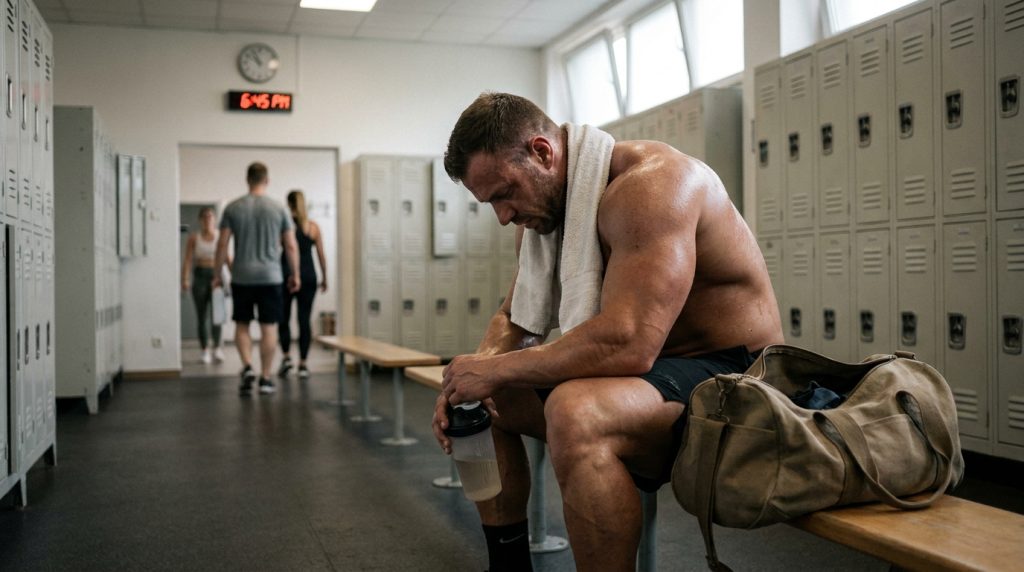
Then the signs pile up. No pump. Weak sessions. Flat look. Bad mood. Random soreness that hangs around too long. Sleep goes to hell. Joints bark. Progress slows down. Still, they keep telling themselves they need to train even harder, because feeling destroyed must mean the workout worked. No. That’s lazy thinking.
Feeling wrecked all the time doesn’t prove the workout worked
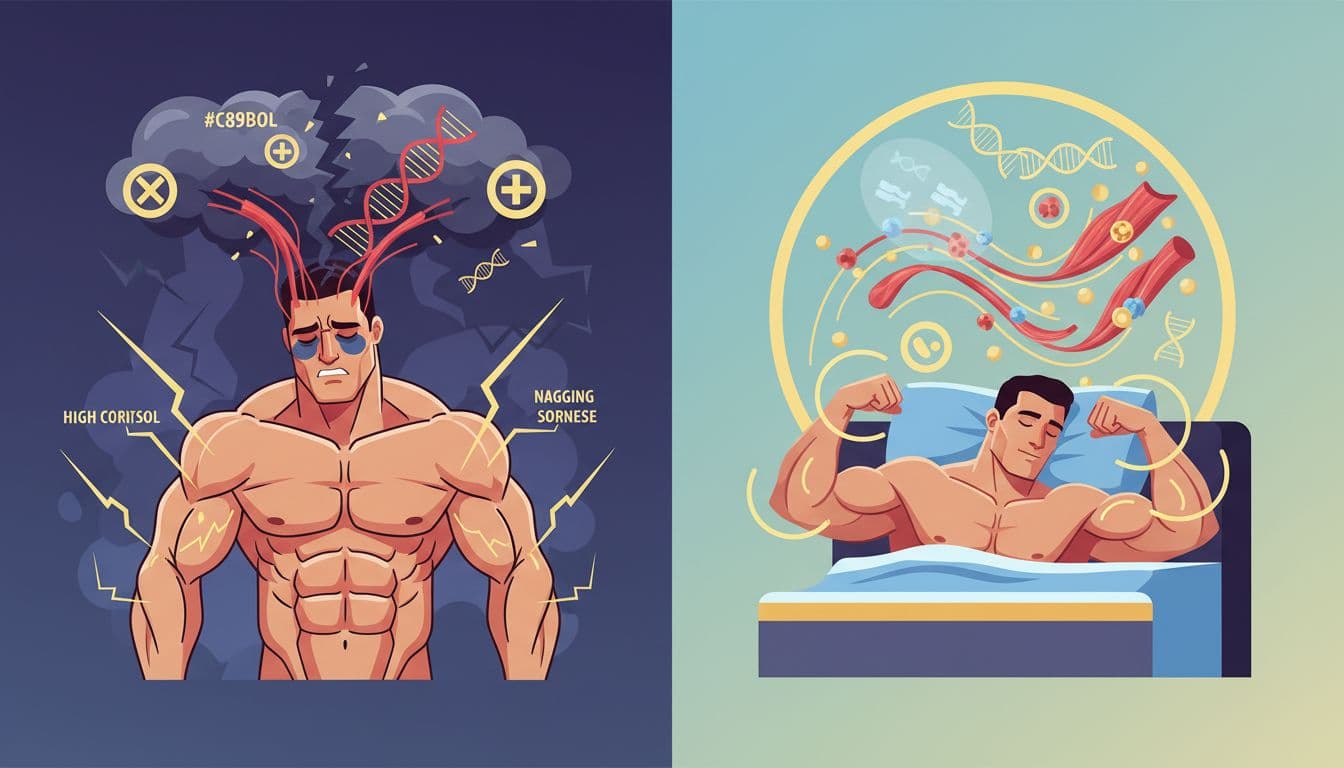
I look at growth as a tug of war. On one side, I’m building. On the other, I’m breaking down. Training gives me the reason to adapt, but recovery decides how well I can bounce back from that hit. I don’t want zero breakdown, because my body still needs a reason to rebuild stronger. I do want to manage it better, though, because if breakdown keeps winning, growth slows.
More soreness doesn’t mean more muscle. Sometimes it means I dug a recovery hole and called it hard work.
A little soreness can happen. Getting crippled every week is not some badge of honor. It’s often a sign I pushed past what I can repair well.
The Reframe
I don’t look at recovery as one hack, one supplement, or one little bedtime trick. I look at the whole equation. What do I eat around training? How do I sleep? What kind of stress am I carrying through the day? That’s the real picture.
Because if I recover better, I can train better again sooner. My output stays high. My strength holds steadier. My sessions feel more productive instead of random. Over time, that’s where more muscle and better performance come from. Not from acting tough while running myself into the ground.
Recovery earns the next hard session
That’s why I like structure so much. Random effort gets random results. A repeatable system gives me something I can judge, adjust, and improve. I talk about that kind of structured approach in the Coach Angelo Protocol, because good bodybuilding is not chaos, it’s doing the boring stuff well enough and long enough that the physique has no choice but to change.
I want to earn the next hard workout. I don’t want to survive it and spend four days feeling like roadkill.

What I Actually Look At
Workout nutrition around training
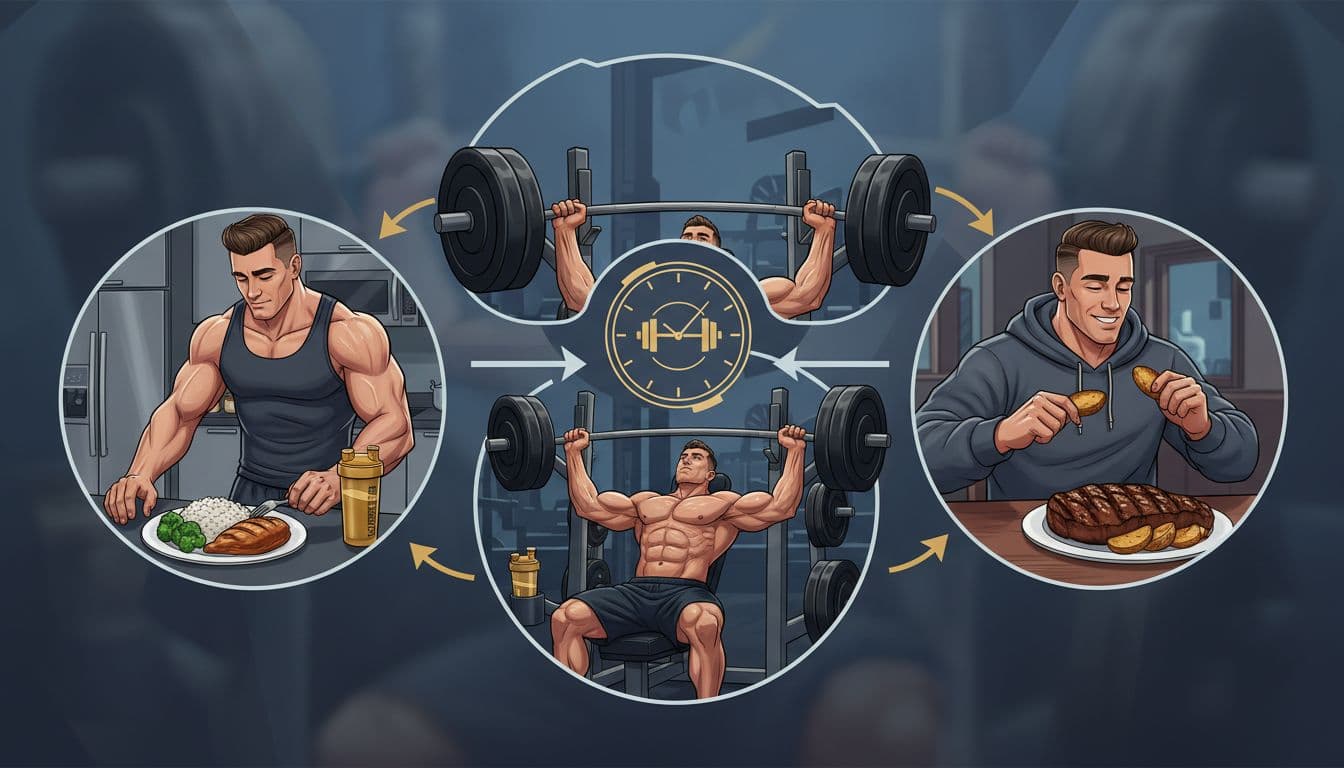
The first place I look is the training window, before, during, and after. That window matters because the session itself is costly. I’m asking a lot from my body there, so I want fuel in place when it counts, not six hours later when the job is already done.
Before training, I like a small balanced meal about 45 to 60 minutes out. For a lot of guys, that could be around 25 to 30 grams of protein, 25 to 30 grams of carbs, and maybe 10 grams of fat. If you’re smaller, scale it down. I don’t need a huge carb dump here. I need enough food so I don’t get hungry halfway through training and start fading like a cheap flashlight.
That meal can be simple. Chicken and rice works. Eggs and toast works. Greek yogurt with fruit works. Oats and whey can work too if your stomach handles it well. I also don’t freak out about a little fat before training. Some people act like fat near a workout is a crime scene. Calm down. A small amount is fine for most people.
During hard sessions, I pay even more attention. This is where easy carbs and essential amino acids can help a lot. I said essential amino acids, not BCAAs. BCAAs are only part of the picture. EAAs give me the full set. If I combine that with an easy-to-digest carb source, especially in long or brutal sessions, I usually get better output and I feel less beat up after. That matters.
I don’t use intra-workout nutrition because it sounds cool. I use it because it can help me keep performance up and keep breakdown from getting out of hand during the session. When training is hard, that makes sense. When training is short and easy, I don’t need to force it. Keep some damn context.
If you want a broader coach-level look at this idea, this structured peri-workout nutrition guide is a useful read. If you want to see how I organize training and food with more structure, you can also read the protocol.
After training, I don’t turn into a timing lunatic. If the pre and intra side is handled well, I don’t need to sprint home and chug sugar like my life depends on it. I usually want a solid balanced meal within about an hour. Steak and rice is great. Chicken and potatoes works. Yogurt with fruit and cereal can work if I need something easy. The point is simple, keep recovery moving with real food and stop overcomplicating the post-workout meal.
Sleep quality and timing
The second thing I look at is sleep, and I don’t mean some fake proud bullshit where a guy brags that he functions fine on five hours. A lot of people can survive on bad sleep. That’s different from recovering well on bad sleep.
Most people do better when they get around 7.5 to 8 hours on a regular schedule. Some can get by with a bit less. A few need more. Still, the big win is consistency. Going to bed at a normal time and waking up at a normal time helps a lot more than people want to admit.
I keep this simple. Early in the night, sleep leans more toward the deeper non-REM phases. That’s where a lot of the physical restoration happens. Later in the night, I get more REM sleep, and that helps more with mental sharpness, mood, and memory. So when I stay up stupid late, I can miss a chunk of the early deep sleep. When I cut my sleep short with an alarm, I can lose a chunk of that later REM-heavy part. Both ends matter.
If you want the science version of that, NCBI’s overview of sleep stages lays out the basic pattern well.
The practical fix is boring, and that’s why it works. I keep a steady bedtime. I stop dragging the night out for no reason. I don’t stack late-night stimulation and then act shocked when my brain won’t shut up. I build a wind-down routine I can repeat. Nothing weird. Nothing guru-like. Just habits that make sleep happen more often and with less fight.
Stress that keeps beating up recovery
The third thing I look at is stress, because stress does not stay in your head. It shows up in your sleep, your appetite, your mood, your training focus, and how wrecked you feel after normal work. One bad day is not the issue. Constant pressure with no reset is the issue.
When stress stays high all the time, recovery tends to get worse. I see guys lose training quality, lose hunger, sleep badly, and feel flat for weeks. They keep pushing, but the body keeps sending the same message, “I am not caught up.” You cannot keep flooring the gas when the engine is already overheating.
Some stress needs a mindset fix. Maybe I stop making every small problem feel like a crisis. Maybe I stop carrying work home in my skull all night. Some stress needs action. Hard conversation. Better boundaries. Cleaner schedule. Less dumb chaos.
And some of it is people. Negative people, draining people, people who complain every damn day and dump their garbage on you. I don’t keep those people too close. Not everyone deserves access to my headspace. If somebody keeps pulling me down, I either set the boundary or I cut the contact. That is recovery too.
What To Do Instead
I keep a simple weekly checklist in my head, and it works because I can repeat it.
- I eat with purpose around training, so I’m fueled before, supported during hard sessions, and fed after.
- I protect sleep with a regular schedule, because recovery hates chaos.
- I clean up stress I can control, including dumb habits and draining people.
Then I watch for the right signs. Pumps come back. Soreness becomes more reasonable. Strength stops bouncing around like a clown show. Mood gets steadier. Sessions stack better week to week.
If you want proof that these basics change physiques over time, see client results. The body tells the truth when the process is right.
FAQ
How much sleep do I need to recover from lifting?
Most guys recover better with around 7.5 to 8 hours. Some do okay on 7. Very few thrive on 5 or 6. If training is hard and life is busy, more sleep usually helps.
Do I need carbs during every workout?
No. Intra-workout carbs make more sense when sessions are long, hard, and high-output. If I’m doing a short easy session, I usually don’t need to force it.
Are BCAAs enough for recovery?
I prefer essential amino acids for hard sessions because they give the full range, not only a few aminos. That makes more sense to me around training.
Is being sore a sign of muscle growth?
Not always. Some soreness is normal. Crippling soreness every week often means recovery is losing and training quality will suffer next.
What’s the fastest way to improve recovery without changing my whole life?
Set a real bedtime and stop winging food around training. Those two fixes alone can clean up a lot of stupid problems fast.
If you keep chasing fatigue, you will keep spinning your wheels. I would rather recover well, come back stronger, and make the next session count. That’s how I build muscle without living in a constant fog of soreness and bullshit. If you want help setting this up in a way that fits your body, your schedule, and your training level, work with me.
Feel good, eat good, fuck good.
Disclaimer
This article is for education only. It is not medical advice, diagnosis, or treatment. If you have a medical condition, take medication, use PEDs, or have abnormal labs, get qualified medical oversight before applying any of this.
Author
Angelo is a European online coach and a former competitive bodybuilder. He works with serious lifters who want more muscle, better condition, sharper execution, and less guesswork. The job is simple: fix the basics, apply progression properly, manage recovery, and stop doing dumb shit that kills progress.
Scientific References