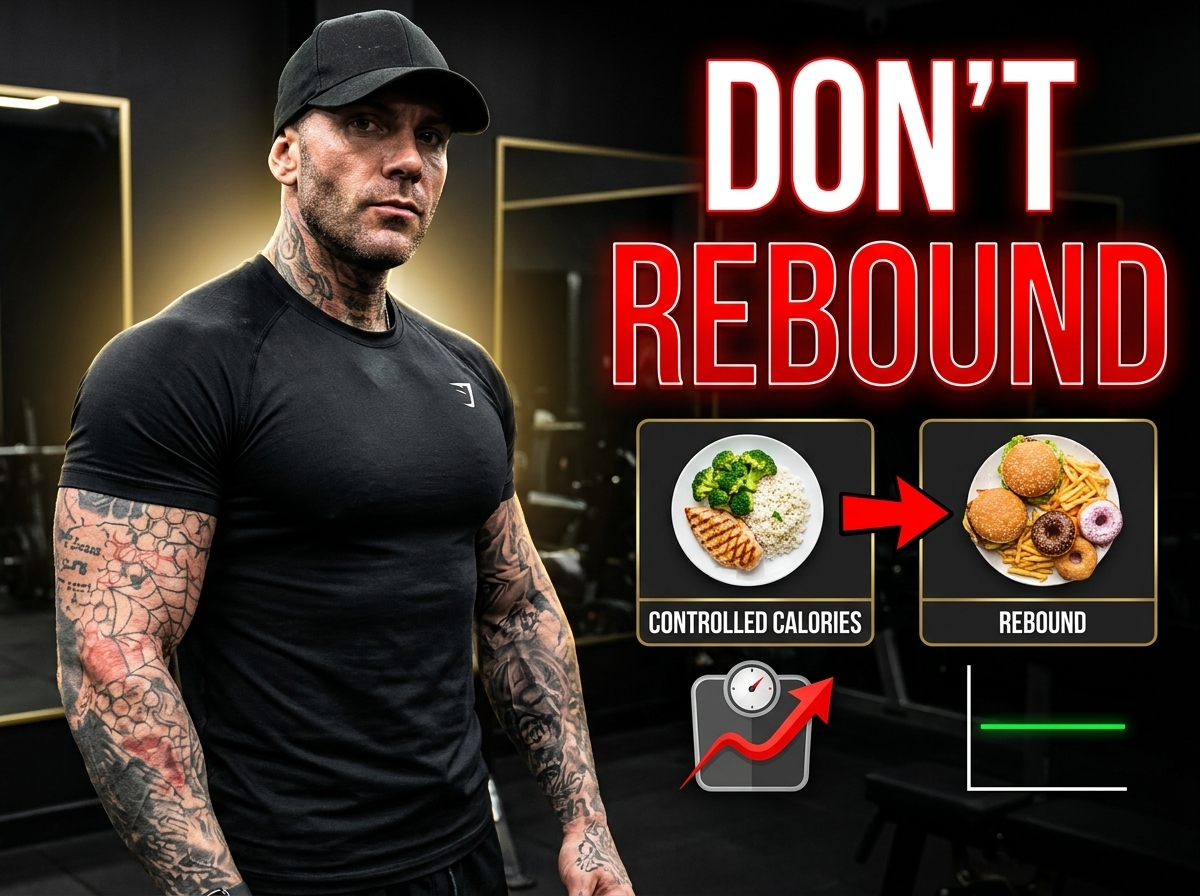
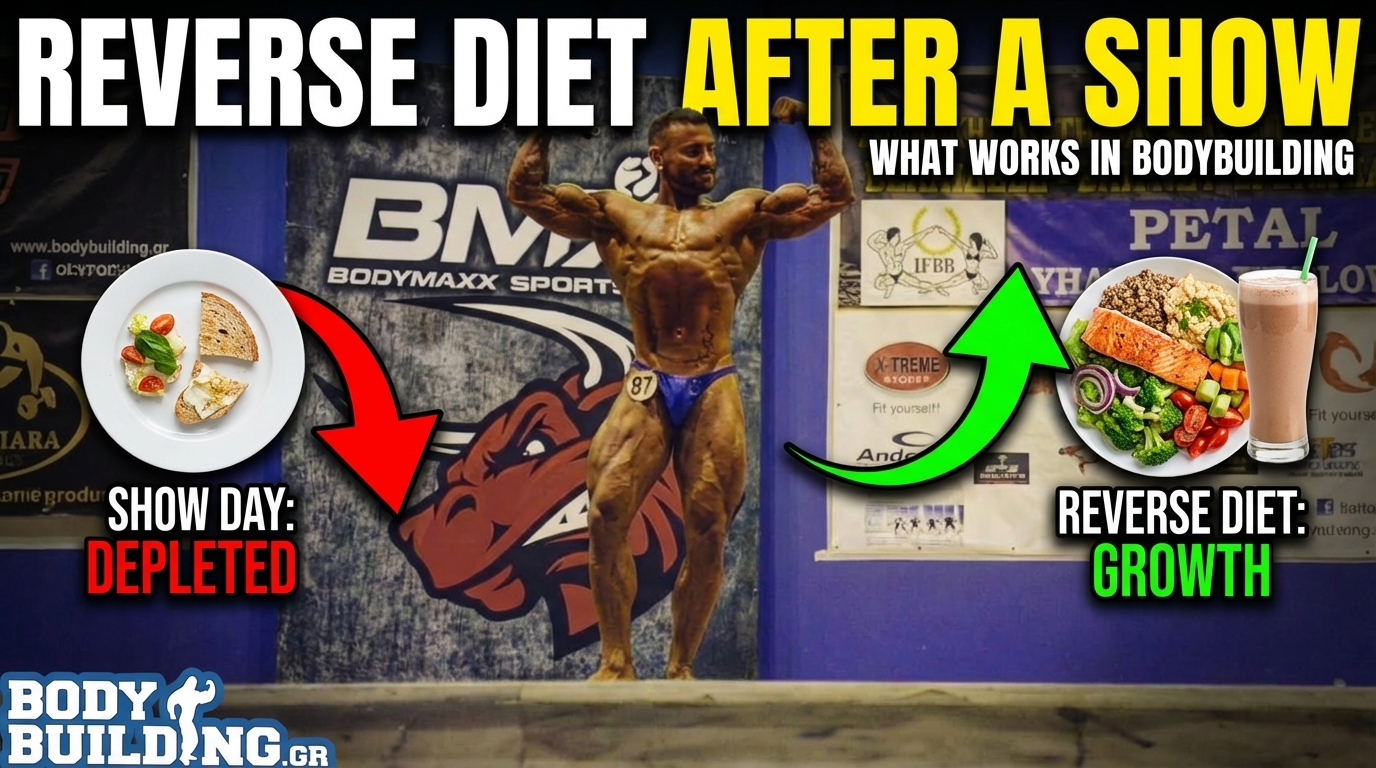
Don’t act like the show is over and the job is done. That’s the point where a lot of guys blow the whole damn season.
I see the same mess every year. One guy comes off stage and eats like a raccoon in a dumpster. Another stays scared, keeps cardio stupid high, keeps food stupid low, and calls it discipline. Both ways are dumb. After a show, your body is flat, stressed, hungry, and ready to react hard. If I don’t control that phase, I’m not rebuilding you, I’m watching you wreck yourself.
The Problem
The binge rebound gets ugly fast
The first screw-up is the post-show free-for-all. Calories jump through the roof, sodium goes nuts, digestion turns to shit, and the scale shoots up so fast you think your metabolism died. It didn’t. You had no structure.
Now, not all early gain is fat. Some of it is water, glycogen, gut content, and finally looking human again. But if you turn one cheat meal into a three-day circus, good luck figuring out what’s normal and what’s self-inflicted.
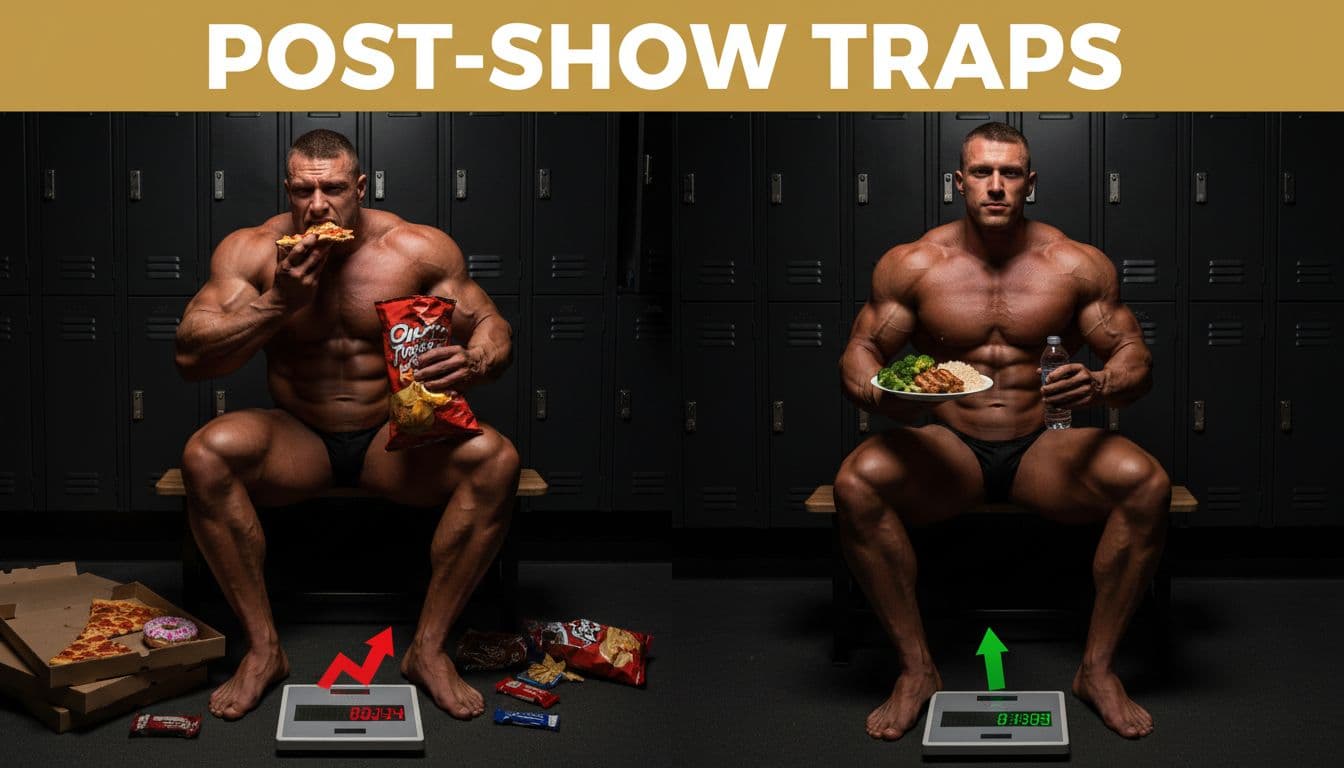
Staying in prep mode is just as bad
The other screw-up looks cleaner, but it still wrecks progress. You stay half-starved, keep cardio high, flatten your training, sleep like crap, and wonder why no muscle shows up.
That isn’t toughness. That’s dragging prep into the off-season. Recovery stalls, libido tanks, mood gets weird, and the next growth phase starts on a beat-up body. So yeah, the problem after a show isn’t hunger by itself. It’s having no plan.
The Reframe
Reverse dieting is repair work, not a reward
I don’t treat a reverse diet like a prize for surviving prep. I treat it like repair. Big difference.
After a show, I’m trying to bring you back to life without letting body fat run wild. That means better training, fuller muscles, better hunger control, calmer digestion, and some normal function again. If you want a better look at how I structure that process, read the protocol.
For a solid outside breakdown of why post-show recovery needs structure, The Bodybuilding Dietitians explain the recovery vs reverse diet trade-off.
Slow is not always smart
As of April 2026, most good coaching practice still supports planned increases and weekly adjustments. Not reckless jumps, but not snail-speed suffering either.
Very slow reverses get romanticized by people who love feeling hardcore. I don’t. If you stay in a deficit too long, hunger stays high, stress stays high, and training stays mediocre. Faster isn’t always better, but slower for the sake of slower is bullshit too. Biofeedback decides the pace.
What I Actually Look At
I start from real prep numbers, not fantasy maintenance
I begin with your actual intake at the end of prep. Not the maintenance number you guessed while you were peeled, tired, and half-dead. Stage lean is not normal. So those guesses are usually trash.
In week one, I’ll often bring calories up by about 300 to 400. Sometimes that looks like a controlled move toward maintenance. Protein stays steady, usually around 0.8 to 1 gram per pound. I don’t play games with that. Protein is the anchor.
I push carbs first, because they give me the most back
Most of the added food comes from carbs first. Why? Because carbs refill glycogen, improve pumps, help training, and make you look and feel alive again. They also give me faster feedback.
A common move is adding roughly 40 to 75 grams of carbs per week, depending on how brutal prep was, how lean you got, and what your check-ins look like. Fats usually come up slower, often 5 to 15 grams per week. Not because fats don’t matter, but because carbs usually fix more stuff right away.
Cardio changes fast too. HIIT goes to zero right after the show. I’m not piling more stress onto a body that’s already cooked. Then I usually pull steady-state cardio down by around 30 to 50 percent over the first two weeks.

The check-ins tell me if the reverse is working
I don’t react to one random weigh-in. Post-show scale data is messy as hell. More carbs means more water. Sodium shifts. Sleep shifts. Digestion shifts. So I watch weekly averages, not daily panic.
Early on, about 0.5 to 1 pound per week is often fine. Again, a lot of that isn’t fat. But if that rate keeps flying up after the first couple of weeks, I slow the additions down.
I also watch photos, gym performance, pumps, hunger, cravings, sleep, stress, mood, libido, recovery, and digestion. If loads are moving better, pumps are back, and you don’t look dead between sets, good. If digestion is wrecked and your head is all over the place, I need changes.
That’s why I coach the reverse like part of the growth phase, not a side quest. If I handle these weeks well, I can set up a productive off-season. If I don’t, you get fat fast or stay stuck. If you want to see how real physiques change when this is managed well, see client results. And if you want another outside take from old-school strength culture, EliteFTS covers the contest prep aftermath well.
What To Do Instead
A simple post-show checklist for the first few weeks
Log your food like an adult. Weigh yourself daily, then use weekly averages. Kill HIIT right away. Bring steady-state cardio down fast. Keep protein stable. Add carbs with intent. Watch digestion, sleep, training, and mood.
Most importantly, stop changing the plan every time the scale twitches. A good reverse usually takes 8 to 16 weeks, depending on how hard prep was. This phase is not separate from growth. It sets growth up. If you want more practical stuff on that bigger picture, RNT Fitness has a useful guide on avoiding fat regain after a hard diet.
The weeks after the show decide whether you recover and build, or get soft and pissed off. That’s the truth. If you’re done guessing and want the whole thing handled properly, work with me.
Feel good, eat good, fuck good.
Disclaimer
This article is for education only. It is not medical advice, diagnosis, or treatment. If you have a medical condition, take medication, use PEDs, or have abnormal labs, get qualified medical oversight before applying any of this.
Author
Angelo is a European online coach and a former competitive bodybuilder. He works with serious lifters who want more muscle, better condition, sharper execution, and less guesswork. The job is simple: fix the basics, apply progression properly, manage recovery, and stop doing dumb shit that kills progress.