You keep asking me for one magic back exercise, and that’s why your back still looks half-built. That’s the first slap in the face. I don’t care about vague talk like “I want a bigger back.” Bigger is lazy. I care about shape, outline, and depth.
If I don’t know what your back is missing, I can’t fix it. That’s where most guys waste months, because width and thickness are different jobs, and they train them like one blurry blob.
The Problem
Most back workouts suck for one reason, there is no real diagnosis. Guys throw in pulldowns, rows, maybe deadlifts, then call it complete. Fine for a beginner. After that, it’s autopilot bullshit.
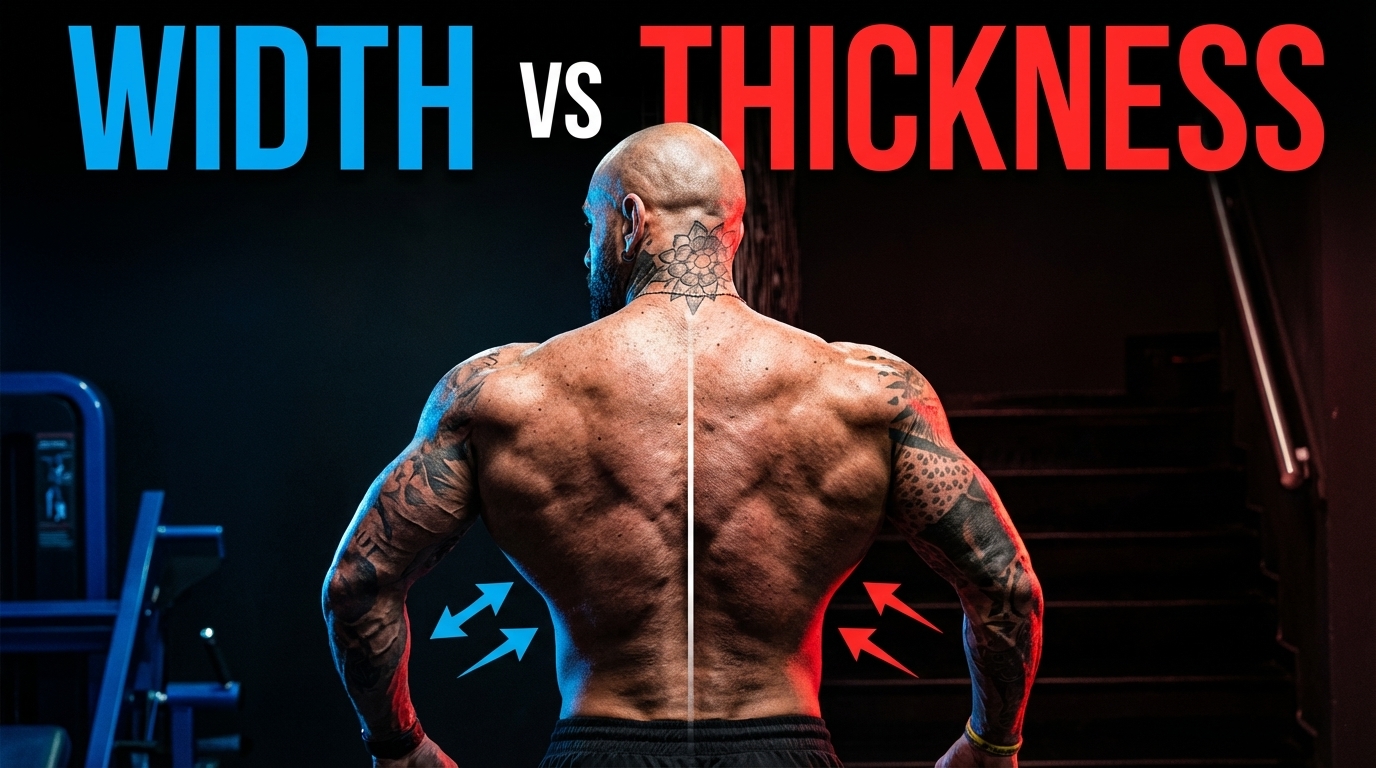
Truth 1 is simple, back width and back thickness are not the same goal. Width changes the outline. That’s the broad look, the flare, the V shape. Thickness changes depth. That’s the dense, heavy look from the rear and the side.
Truth 2 is uglier, most guys train both evenly and wonder why the weak point stays weak. Equal work sounds fair. It isn’t. If your width is behind, burying pulldowns late in the session is stupid. If your thickness is behind, doing rows after you’ve fried yourself with random fluff is just bad planning.
The mirror makes this worse, because “bigger” tells me nothing. Bigger where? Wider, or deeper? If I don’t answer that first, the whole workout gets muddy.
The Reframe
So I split the job. I stop thinking “more back” and I ask one better question, is the outline weak, or is the depth weak?
That’s the whole reframe, and it cleans up a lot of dumb decisions fast. Width is more lat-driven, so vertical pulling matters more. Thickness leans harder on the upper and mid-back, so rows matter more. Same body part, different visual target, different bias.
If your rear pose loses shape fast, width is probably behind. If you spread a bit but still look flat through the middle, thickness is probably behind. That’s not perfect science, but it’s a hell of a lot better than guessing by pump, soreness, or whatever exercise you saw online five minutes ago.

What I Actually Look At
Truth 3, the exercise matters less than the pull path and the way you do the rep. People obsess over the name of the movement. I don’t. Pulldowns, pull-ups, rows, machine rows, pullovers, all of that can work. The question is, who is doing the work?
For width, I want cleaner shoulder depression and a cleaner elbow path. In plain English, I want the lats pulling, not the upper traps shrugging and stealing the set. That usually means more control through the torso, less flopping around, and less trying to look hardcore while the target muscle does nothing.
This is why vertical pulls keep showing up when the goal is width. Nothing new in 2026 changed that. Pull-ups and pulldowns still bias the lats better than random rowing spam when the goal is more flare. Grip can change feel, sure, but the bigger issue is whether you can keep the rep honest.
For thickness, I want rows that load the mid-back without turning every set into a circus. This is where guys lie to themselves. They call it “heavy back work,” but it’s mostly hip swing, lower-back strain, and a prayer. That’s not thickness. That’s a bad imitation of effort.
Chest-supported rows, machine rows, and cable rows often win here because they let me load the tissue I want. I can drive retraction, control the torso, and keep the rep where it belongs. If your lower back is screaming louder than your upper back on every row, you’ve probably missed the point.
If the outline dies, fix width. If the middle looks flat, fix thickness.
Truth 4, genetics and structure still matter, even if people hate hearing it. Some guys build width faster because their frame and lat insertions help the look. Other guys pack on upper-back density early and look thick without trying. No exercise changes your bone structure. No secret cue rewrites your insertions.
Waist size matters too. A smaller waist makes the same back look wider. That’s not fake. That’s visual contrast. If you’re chasing a V taper, body fat and waist control matter right along with training.
But bad genetics are not a free pass for bad programming. I don’t care if width comes easy or not. I still need the right bias, the right order, and better reps over time. Structure sets limits. It does not excuse lazy work.
Truth 5 ties all of this together, the weak point has to go first. Always. The thing that’s behind needs first claim on energy, focus, and quality execution. Otherwise it stays behind while you keep telling yourself you’re training hard.
What To Do Instead
If width is the problem, I start with vertical pulling while I’m fresh. Something like a neutral-grip pulldown first, then a single-arm pulldown, then one row, then a lat isolation finisher works fine. I don’t need ten exercises. I need intent.
If thickness is the problem, I open with rows. Chest-supported row first, then a cable or machine row, then one vertical pull, then a pullover or similar finisher. Simple. Hard. Logged.
I usually run that bias for 6 to 8 weeks. Then I track reps, load, and rep quality. I want better control, better output, and more load when it makes sense. Not random suffering. Directed work.
If your back still looks incomplete, stop chasing a magic exercise and stop training it like one blob. Diagnose the look, pick the lagging quality, and train that first. If you want me to clean up your setup properly, work with me.
Feel good, eat good, fuck good.
Disclaimer This article is for education only. It is not medical advice, diagnosis, or treatment. If you have a medical condition, take medication, use PEDs, or have abnormal labs, get qualified medical oversight before applying any of this.
Author Angelo is a European online coach and a former competitive bodybuilder. He works with serious lifters who want more muscle, better condition, sharper execution, and less guesswork. The job is simple: fix the basics, apply progression properly, manage recovery, and stop doing dumb shit that kills progress.