High-frequency training looks hardcore on paper. For most intermediates, it is just fatigue with better branding. If your logbook is flat, your joints are irritated, and your physique looks the same, the problem is not effort. The problem is how often you are trying to force output you cannot recover from.
This is where a lot of lifters get trapped. They are no longer beginners, so they assume the answer is more frequency, more exercises, and more weekly fatigue. It sounds advanced. It usually is not. It is just diluted work.
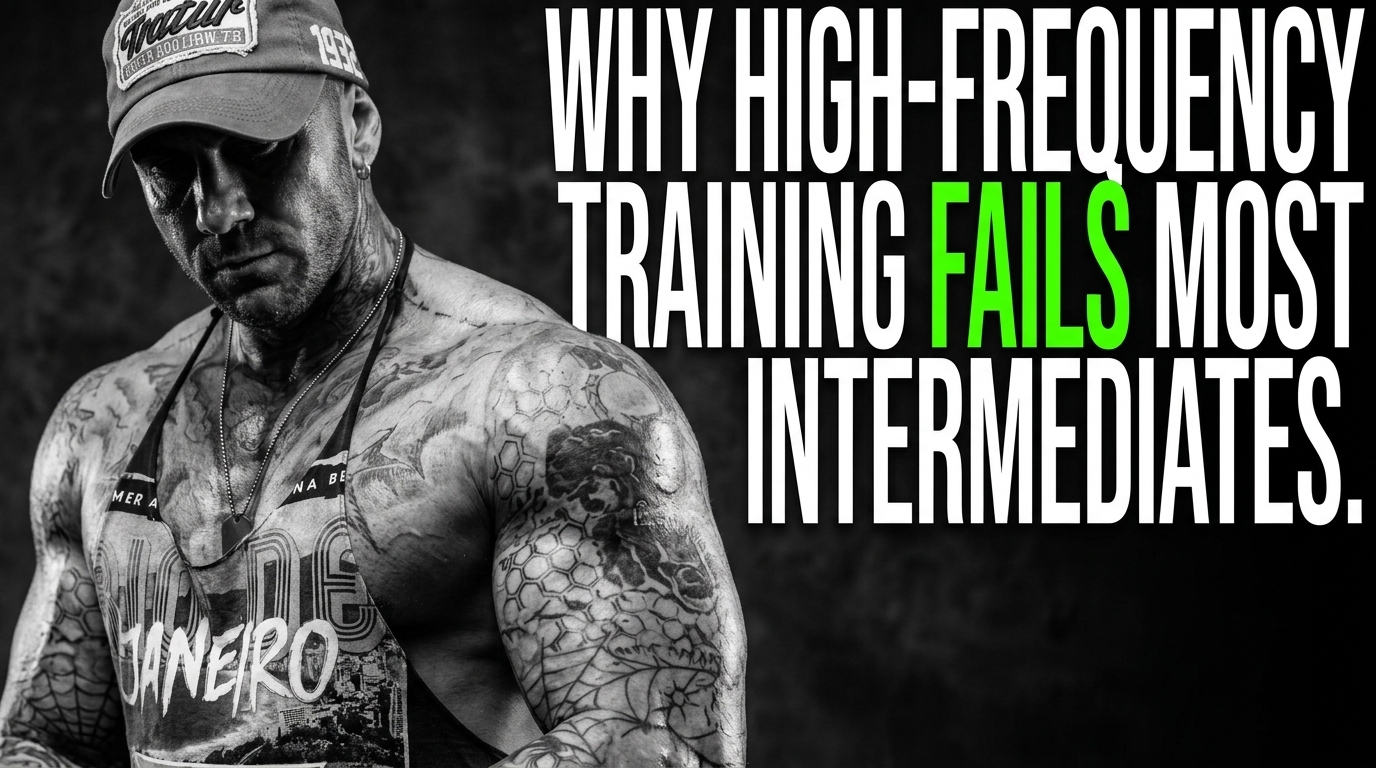
Why High-Frequency Training Fails Most Intermediates
Most intermediates do not fail because they are lazy. They fail because they confuse exposure with progress.
- More sessions, worse output. If you train a muscle again before it is ready to perform, the next session is lower-quality work pretending to be more stimulus.
- Weekly fatigue rises faster than weekly growth. Your joints, connective tissue, sleep, and nervous system all pay the bill.
- Your best sets stop being your best sets. When top-set performance is flat, hypertrophy usually follows it.
- You end up copying people who are not in your situation. Advanced lifters, enhanced lifters, or content creators with easier recovery do not represent your reality.
For most intermediates, high frequency does not create more productive work. It spreads mediocre work across more days.
The Real Mechanism: Recovery Debt Kills the Stimulus
The issue is not frequency by itself. The issue is what happens when frequency rises faster than recoverability.
- Local recovery is incomplete. The target muscle is still carrying fatigue when you hit it again.
- Systemic fatigue accumulates. Sleep quality, appetite, drive, and execution start slipping even if you are still showing up.
- Progressive overload stalls. If loads, reps, and execution quality are not improving, you are not giving the body a reason to grow.
- Life stress is ignored. Real intermediates have jobs, poor sleep phases, travel, and inconsistent recovery windows. Programs that ignore that are fantasy programming.
That is why the answer is usually not “train more.” It is “organise the week better.” If you want a system built around that logic, read The Protocol.
What Actually Works for Intermediate Lifters
If the goal is hypertrophy, most intermediates do better with fewer exposures and higher-quality work inside each one.
- Train each muscle 2 to 3 times per week. That is enough frequency to practice, progress, and accumulate quality work without burying recovery.
- Keep the split stable long enough to measure progress. Constant change kills useful data.
- Bias toward hard, repeatable sets. Better top sets and cleaner back-off work beat random volume every time.
- Control weekly set count. The goal is productive volume, not junk volume.
- Use recovery like a real variable. Sleep, food, stress, and performance trend decide whether more frequency is earned.
Most of the time, an upper/lower structure, push-pull-legs with controlled volume, or a priority-based split beats the trendy six-day full-body experiment. That is the difference between training and collecting fatigue.
The Coach Angelo Protocol for Building Muscle Without Burning Out
1. Cut the Frequency Before You Add More Volume
If your lifts are flat and your recovery is unstable, reduce frequency first. Keep enough exposure to progress, but stop pretending that daily stimulation is automatically productive.
2. Make Performance the Standard
Your main lifts should be moving in reps, load, or execution quality. If they are not, the program is wrong or recovery is leaking.
3. Prioritise the Right Muscles
Not every body part deserves the same resources. Weak points should get the best slots and the cleanest work. Dominant muscles do not need vanity volume. That is exactly how I structure muscle-building coaching when the goal is actual physique improvement.
4. Track the Week Like an Adult
Log your sessions. Review the week. Look at strength, sleep, soreness, joint stress, and bodyweight trend together. If the system is not producing progress, change the system. Do not keep doubling down on bad structure.
What to Do Next
If your current split has you training hard but looking the same, stop chasing frequency and start chasing better output. Better sets, better recovery, better organisation. That is what grows muscle.
If you want to see what structured execution produces, go through the client results. If you want the full coaching system instead of another generic split, start on the Work With Me page.
Disclaimer: This article reflects a coaching perspective for educational purposes only. I am not a doctor, and this is not medical advice. Any drug use, bloodwork interpretation, or health decision should be handled with a qualified medical professional.
Related Reads
If you want the protocol, not the guesswork, apply for coaching here.