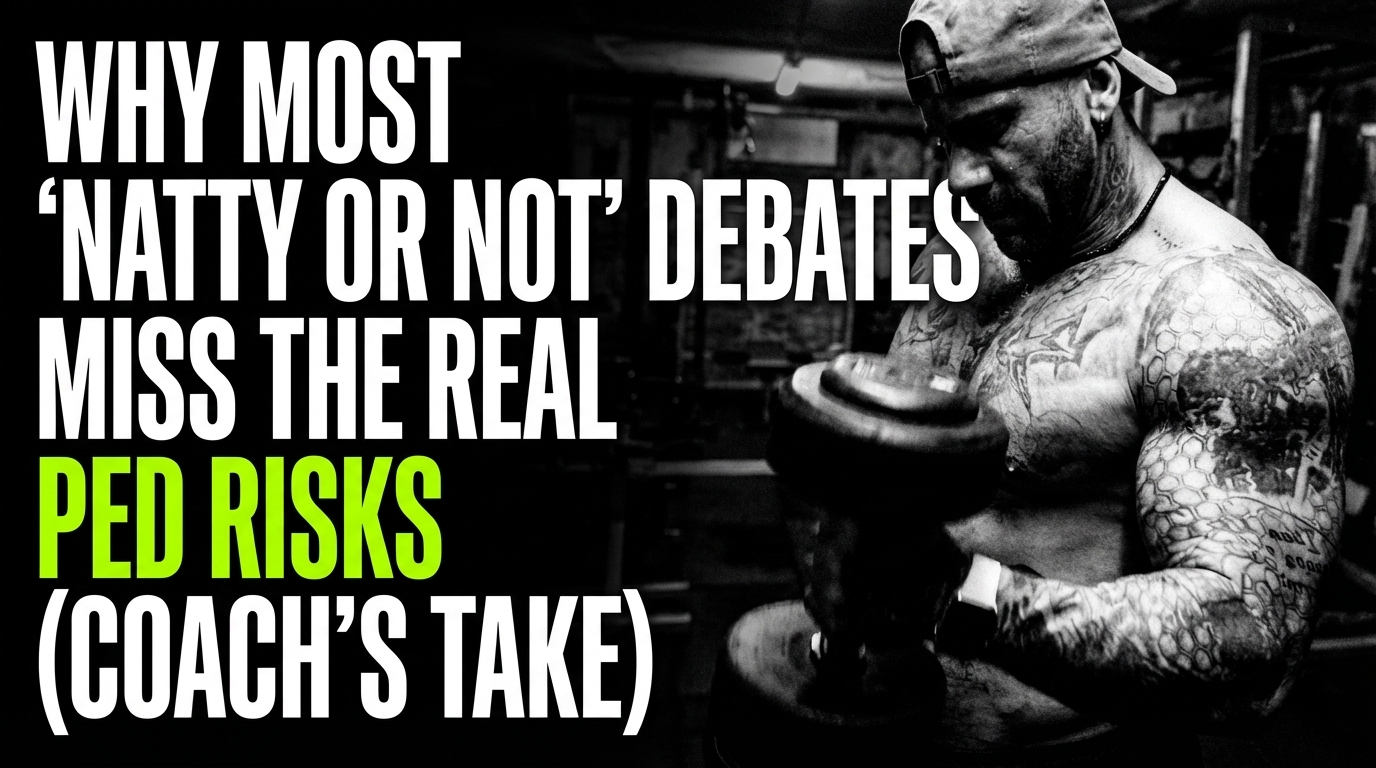
Most natty-or-not debates are a waste of oxygen.
They sound serious, but most of them are just gossip dressed up as analysis. People argue about who is natural, who is lying, and who is blasting, while ignoring the part that actually matters: risk.
If you want a serious conversation about PEDs, stop playing detective and start looking at consequences.
What These Debates Usually Get Wrong
The average natty-or-not argument is built on appearance, insecurity, and zero clinical context.
- People guess drug use from a photo instead of understanding physiology.
- They obsess over honesty while ignoring blood pressure, lipids, hematocrit, and long-term strain.
- They turn enhancement into entertainment instead of a high-risk decision.
That is why these debates miss the real PED risks. They focus on exposure, not cost.
The Real PED Risk Conversation
PEDs are not just a shortcut conversation. They are a systems conversation.
Once someone starts manipulating hormones, the conversation should move immediately to monitoring, side effects, and how much damage they are willing to trade for the look they want.
- Blood markers can move fast in the wrong direction.
- Cardiovascular strain does not care how impressive someone looks on stage or online.
- Psychological dependence can build long before people admit it.
- Bad decision-making compounds quickly when people copy protocols they do not understand.
That is the part the internet mostly skips, because gossip is easier than responsibility.
Why the Internet Keeps Getting This Wrong
Most people talking the loudest about PED use are not qualified to talk about risk management.
They know how to speculate. They do not know how to interpret bloodwork, assess long-term tradeoffs, or separate aesthetics from health cost.
That is why the conversation keeps collapsing into the same dead-end loop:
- Who is natural?
- Who is lying?
- Who is bigger?
Those questions might entertain people. They do not make anyone smarter.
What Serious Lifters Should Focus On Instead
If someone actually cares about performance and longevity, the better questions are obvious.
- What is happening to the health markers?
- What side effects are being ignored because the physique still looks good?
- What level of supervision, monitoring, and honesty is actually in place?
- Is the person making a decision, or just following the culture around them?
If you want the broader system behind structured decision-making, read The Protocol.
If you want to see what structured coaching looks like in practice, go to the Results page.
Bottom Line
Most natty-or-not debates miss the real PED risks because they are built for drama, not clarity.
The real conversation is not about catching liars. It is about understanding the physical and health cost of reckless enhancement decisions.
If you want coaching built on structure instead of noise, see Work With Me or apply here.
Disclaimer: This article reflects a coaching perspective for educational purposes only. I am not a doctor, and this is not medical advice. Any drug use, bloodwork interpretation, or health decision should be handled with a qualified medical professional.